Headphones and earbuds
Best Headphones Under $100: Wired and Wireless Options
Buying headphones under $100 is an exercise in choosing which conveniences matter. A basic wired model can avoid battery and pairing concerns, while an affordable wireless pair can add ANC and app controls at the cost of more electronics to manage.

James Carter is an editorial pen name for Sound Mic Test's headphone coverage. Articles under this byline focus on comfort, isolation, connectivity and the everyday trade-offs between different headphone designs.
Sound Mic Test editorial pen name.
james.carter@soundmictest.com
Buying headphones under $100 is an exercise in choosing which conveniences matter. A basic wired model can avoid battery and pairing concerns, while an affordable wireless pair can add ANC and app controls at the cost of more electronics to manage. Neither approach is automatically the better value.
For this shortlist, Audio-Technica ATH-M20x represents straightforward wired listening and soundcore Q30 represents a feature-rich wireless route. US prices checked during preparation were $59 for the ATH-M20x at a major retailer and $79.99 on soundcore's Q30 page, before tax and shipping. Prices can change before publication or checkout, so the budget rule applies to the actual final purchase.
Two different ways to spend the budget
| Option | Useful strength | Main compromise |
|---|---|---|
| Audio-Technica ATH-M20x | Simple passive wired listening | Cable management and no wireless features |
| soundcore Q30 | ANC, wireless use and app EQ | Charging and mode-dependent behavior |
| Keep existing headphones and fix the connection | Potentially lower cost | Only useful if the headphones already meet your needs |
These are research-based recommendations. The comparison uses documented features and a dated price check, not a claimed blind listening test or a numerical value score.
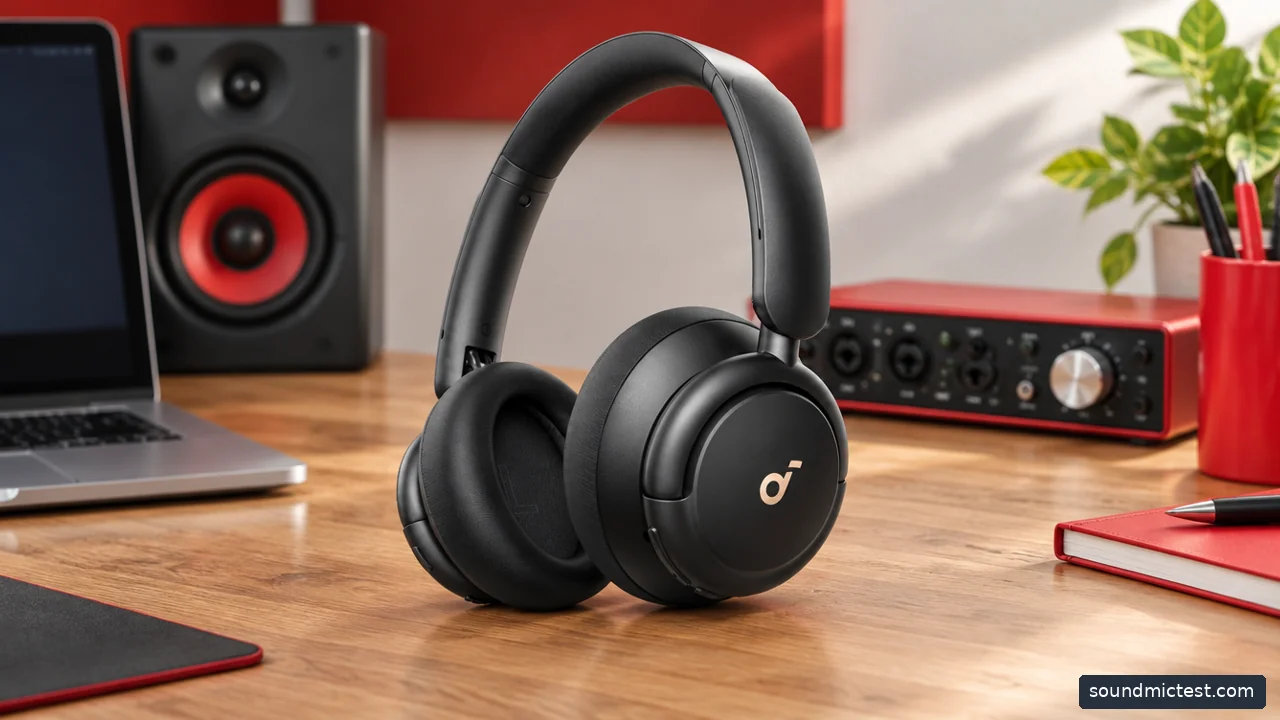
Budget headphones should be judged by the functions you will actually use. Editorial illustration.
ATH-M20x for a quiet desk and a headphone socket
The ATH-M20x product information describes a closed-back wired headphone. Its appeal at this budget is the lack of extra systems to configure: connect it to a suitable headphone output and listen.
Check the cable before ordering. A long studio-style lead can be helpful beside an interface and awkward with a phone in a pocket. It also does not provide the convenience of a detachable cable just because more expensive models in the same family do. Read the exact model specification rather than transferring features from the ATH-M40x or ATH-M50x.
The retailer price check placed it comfortably below the ceiling at preparation time. Leave room for a compatible USB-C audio adapter if your source has no headphone socket. A low headphone price is less useful if the required connection hardware consumes the remaining budget.
Q30 for wireless convenience and noise-control options
Soundcore's Q30 listing includes ANC modes, multipoint and customizable EQ. That is a substantial feature set for someone who wants one pair for a laptop, phone and occasional travel.
The sensible reason to choose it is those conveniences, not an assumption that every feature performs like a much more expensive flagship. Noise cancellation is not complete silence, and battery claims vary with mode. Check the current regional version because similarly named Q30 listings can describe different revisions.
An analog fallback also should not be assumed to preserve every wireless function. Follow the manual for the exact unit when using its cable. Our Q30 setup guide is a useful starting point, but current model-specific documentation takes priority when hardware changes.
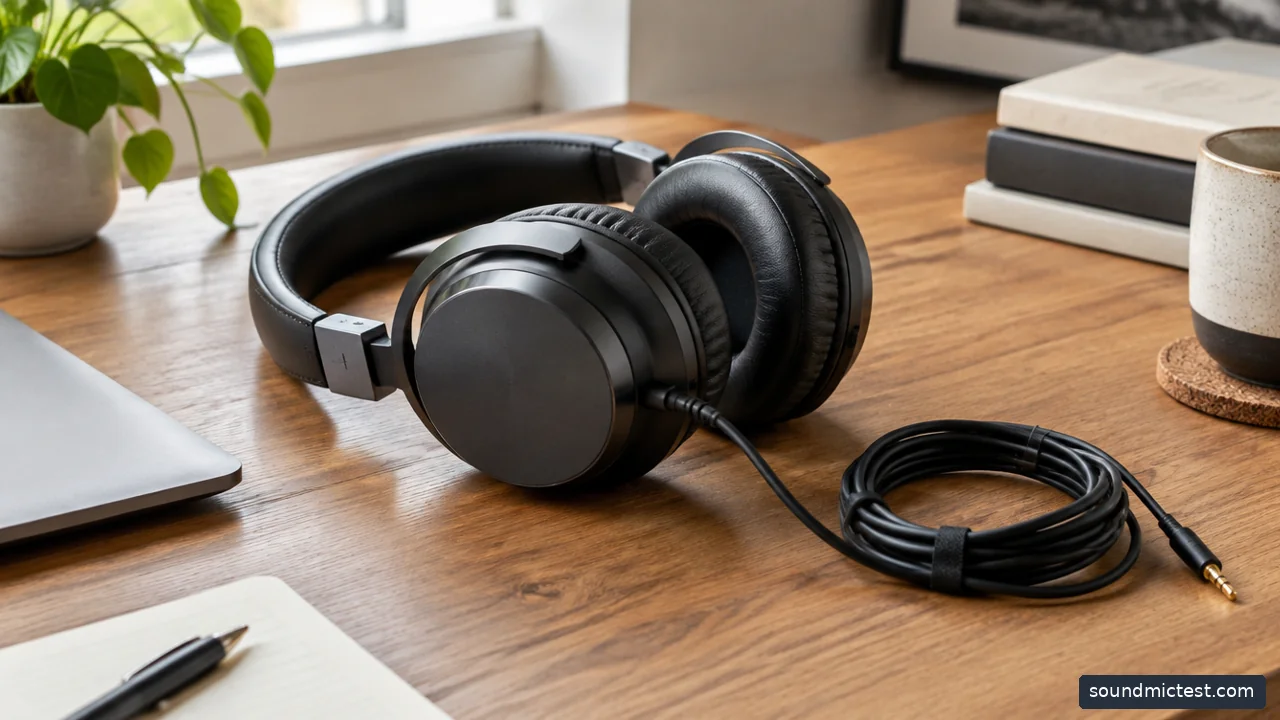
wired over-ear headphones with neatly coiled cable on desk. Editorial illustration.
Do not buy a feature you already own elsewhere
If a desktop microphone handles your calls, a headphone's built-in microphone may be irrelevant. If you listen only at a quiet desk, ANC may add little to the routine. Conversely, a commuter may reasonably choose wireless convenience over a detachable studio cable.
Write down the three tasks you need the headphones to perform. Then remove features that do not affect those tasks. This simple exercise prevents a long specification list from turning a practical purchase into a contest for the most checkboxes.
If you already have comfortable headphones, inspect the problem before replacing them. A damaged adapter, wrong output selection or worn cushion may be the actual issue. Replacement parts can be worthwhile when they are available and appropriate for the model, but do not spend heavily repairing a product that no longer fits your needs.
Comfort and durability still matter below $100
Try the headphones with your glasses and normal working posture. Check whether the cups surround your ears and whether the headband concentrates pressure in one spot. A model that feels acceptable for a minute may become distracting during a complete work session.
Inspect the hinges, cable exit and availability of replacement cushions. These are practical ownership questions, not a claim that one material automatically lasts longer. Keep the receipt and use the return window to evaluate fit without modifying the hardware.
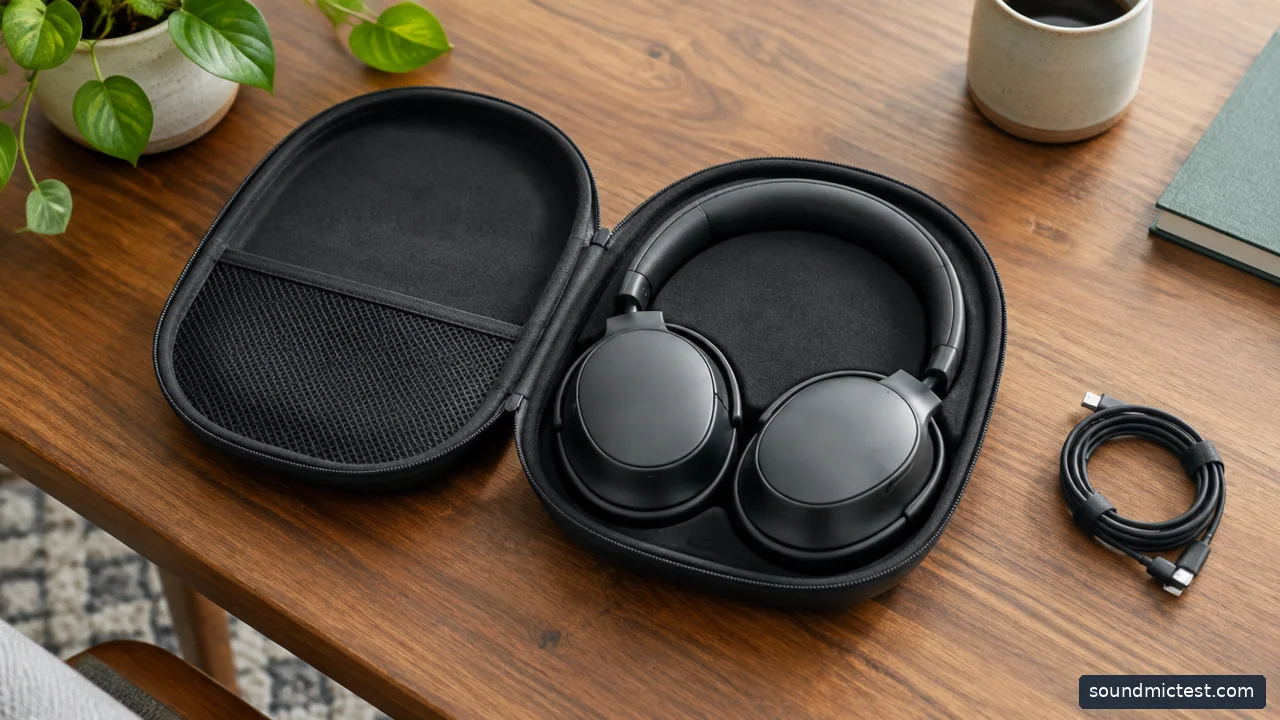
Wireless headphones resting in carrying case beside charging cable. Editorial illustration.
Make a short setup check
After connecting, use the stereo test to confirm both channels. For a wireless model, check which device receives calls when the laptop and phone are connected. If you need its microphone, use the microphone test to verify the selected input.
These checks establish basic function, not sound-quality rankings. Compare familiar music at similar comfortable levels and avoid interpreting a louder presentation as automatically better. If you adjust EQ, make small changes and save a way back to the default.
Choose ATH-M20x when a simple wired setup suits the desk, or Q30 when wireless operation and ANC are features you will use regularly. Keep the complete checkout total under the ceiling, including adapters. At this price, the best value comes from matching a small number of real requirements rather than chasing a miniature flagship.