Headphones and earbuds
Best Bass Headphones: Strong Low End Without Losing the Vocals
Good bass headphones should give low notes weight without making every voice sound distant or every track feel the same. The best choice depends on whether you want stronger acoustic bass, an adjustable sound profile or a physical vibration effect.

James Carter is an editorial pen name for Sound Mic Test's headphone coverage. Articles under this byline focus on comfort, isolation, connectivity and the everyday trade-offs between different headphone designs.
Sound Mic Test editorial pen name.
james.carter@soundmictest.com
Good bass headphones should give low notes weight without making every voice sound distant or every track feel the same. The best choice depends on whether you want stronger acoustic bass, an adjustable sound profile or a physical vibration effect. Those are different experiences, and a large driver does not settle the decision.
Skullcandy Crusher Evo is worth investigating for adjustable sensory bass. Sennheiser Momentum 4 offers a more conventional wireless headphone with sound customization, while an affordable model with EQ can be enough if you only want a modest low-frequency lift. This guide compares documented functions and practical listening choices, not fabricated response curves or bass-output scores.
Decide what more bass means to you
| Goal | Useful approach | Main caution |
|---|---|---|
| Physical rumble | Sensory-bass headphone | Vibration is not the same as acoustic accuracy |
| More low end with control | Headphone with adjustable EQ | Excessive boost can obscure other parts of the mix |
| Better bass from existing earbuds | Improve the seal first | A fit problem may not need new hardware |
| Stronger impact at a desk | Appropriate headphone and source | Loudness can bias a comparison |
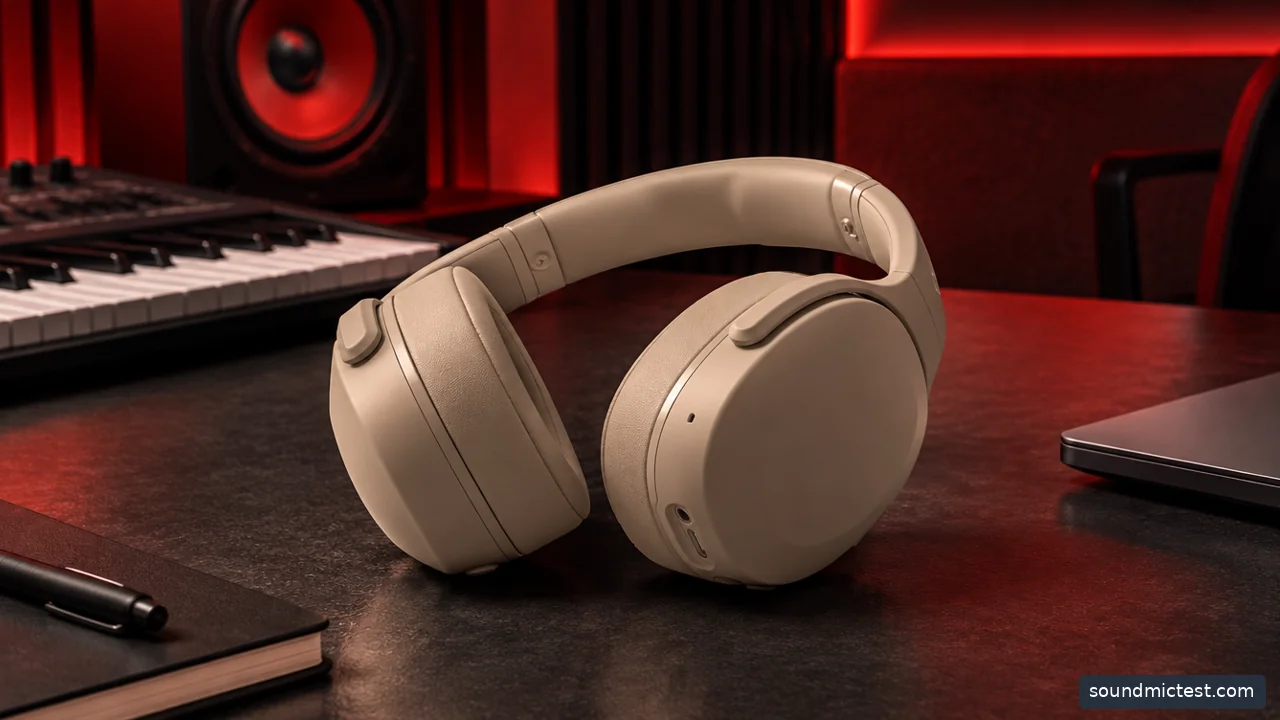
Adjustable sensory bass is a preference feature, not a substitute for clear vocals. Editorial illustration.
Crusher Evo for an intentionally physical effect
Skullcandy describes Crusher technology as a sensory effect using a dedicated vibration mechanism linked to low-frequency content. That is the defining reason to investigate the range, rather than treating it as merely another bass EQ preset.
The Crusher Evo listing includes an adjustable sensory-bass control. The useful approach is to start low and increase it only until it adds the effect you enjoy. Maximum intensity is not a quality target.
The compromise is that the effect can become the focus of the presentation. If you want an unembellished reference for mixing or comparing recordings, that may be the wrong goal. Check the exact variant and stock status as well; active-use and standard listings should not be treated as identical in every feature.
Momentum 4 for a conventional adjustable headphone
Sennheiser Momentum 4 provides sound customization through its companion app. That makes it a useful candidate when you want to shape the low end while retaining a general-purpose travel and desk headphone.
The point is flexibility, not a claim that its bass is objectively superior to every alternative. Begin with the default sound, then make a small adjustment and compare the same section of music. If the vocal becomes harder to follow, the extra low end may be working against the arrangement.
Our Momentum 4 setup guide covers the practical connection side. Keep that separate from tuning preference: a comfortable, reliable headphone can still need an EQ adjustment to match your taste.
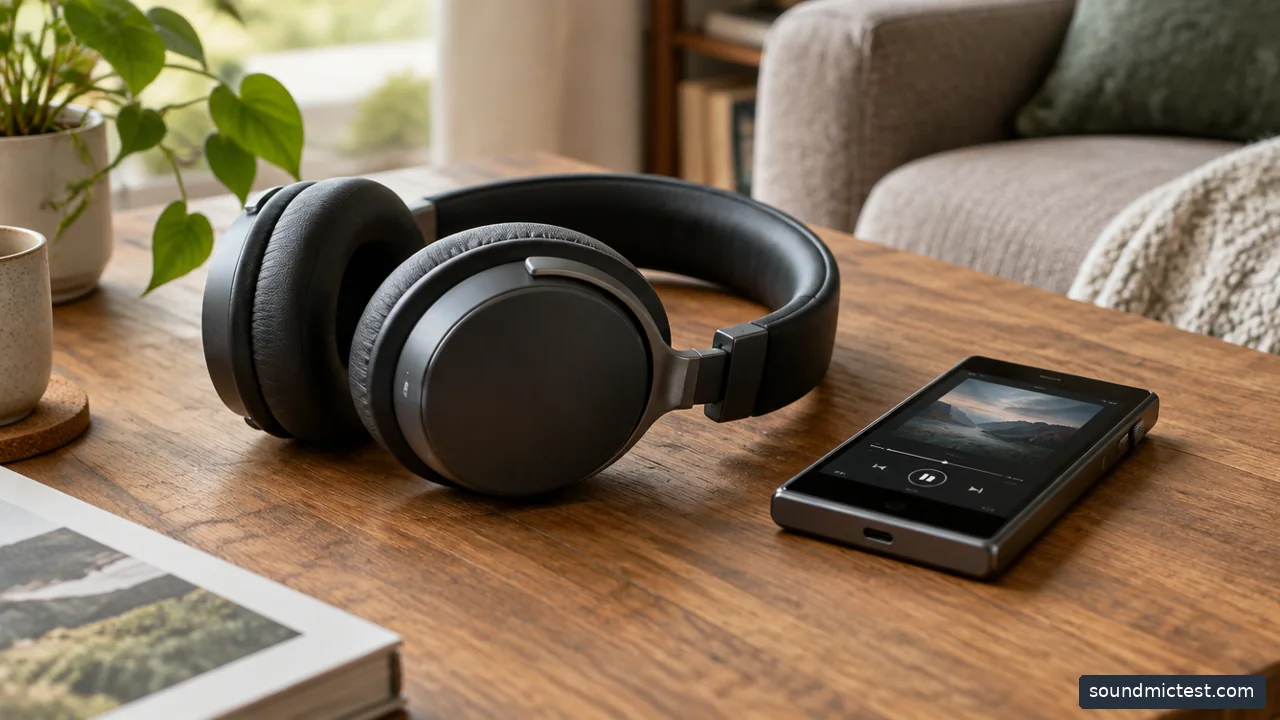
over-ear headphones beside a music player, no graphs. Editorial illustration.
An affordable EQ-equipped model may be enough
The soundcore Q30 offers customizable EQ as part of its feature set. It is worth considering if the goal is a modest adjustment rather than a specialized sensory effect.
Do not assume that adding more bass in software has no trade-off. Large boosts can reduce usable headroom or make other parts of the music less distinct. If the app provides a way to save presets, keep an unchanged reference so you can compare without relying on memory.
Check whether the EQ applies in the connection mode you intend to use. A setting available during Bluetooth playback may not operate identically through an analog cable. The exact product documentation matters more than a general statement that the headphone has an app.
Fix the seal before changing the tuning
For over-ear headphones, inspect whether the cushions sit evenly around the ears. Glasses, hair and worn pads can change the seal. For IEMs, compare tip fit on both sides. If bass disappears when the product shifts slightly, the first issue may be physical positioning.
Do not compensate by raising the volume dramatically. A louder comparison can create the impression of a more exciting headphone while making it harder to judge balance. Use familiar recordings at similar comfortable levels and focus on whether individual bass notes remain distinguishable.
Replacement pads can alter sound as well as comfort. Choose appropriate parts and do not assume thicker cushions automatically produce better bass. A modification that looks minor can change the distance and seal around the ear.

Close-up of headphone ear cushions on a dark wood music desk. Editorial illustration.
Listen for the rest of the arrangement
Use more than one type of recording. A sparse electronic track, a dense rock mix and a spoken vocal can reveal different consequences of the same adjustment. Ask whether the bass line has definition and whether the voice remains easy to follow when the rhythm section becomes busy.
The site's bass listening tool can play low-frequency material, but it does not produce a calibrated headphone response. Do not interpret a tone you cannot hear as a reason to keep increasing the level. Source behavior, fit and hearing all affect the result.
Choose Crusher when the physical sensory effect is specifically what you want. Choose a conventional EQ-equipped headphone when you want a flexible everyday sound. Before buying either, fix the fit and try a restrained adjustment on your existing pair. Strong bass is most satisfying when you can still follow the music around it.