Headphones and earbuds
Most Comfortable Earbuds: Fit Options for Long Listening Sessions
The most comfortable earbuds are not the same shape for everyone. Some listeners want a soft tip and a secure seal; others dislike anything entering the canal.

Noah Mitchell is an editorial pen name for wireless audio and accessories at Sound Mic Test. Articles explore earbuds, portable audio, cables and the small setup choices that affect everyday listening.
Sound Mic Test editorial pen name.
noah.mitchell@soundmictest.com
The most comfortable earbuds are not the same shape for everyone. Some listeners want a soft tip and a secure seal; others dislike anything entering the canal. Ear hooks can reduce the need to wedge a shell into place, but they introduce contact around the outer ear and can compete with glasses.
Start by identifying what becomes uncomfortable in your current pair. Apple EarPods, Shokz OpenFit 2 and Sennheiser IE 200 offer three distinct approaches: a fixed open-fit shell, an open-ear hook and a compact sealed in-ear design. These are fit options to investigate, not a universal comfort ranking based on measurements that do not exist.
Diagnose the fit problem first
| What bothers you | Design worth trying | New compromise to consider |
|---|---|---|
| Sealed-canal sensation | Open-fit or open-ear design | Less isolation |
| Earbuds keep loosening | Different tips or an outer hook | Extra contact around the ear |
| Shell presses on the outer ear | Smaller shell or different geometry | May lose features or battery capacity |
| Glasses conflict with hooks | Conventional in-ear design | More reliance on tip fit |
| Pillow pressure | Sleep-specific low-profile product | Specialized functions and cost |
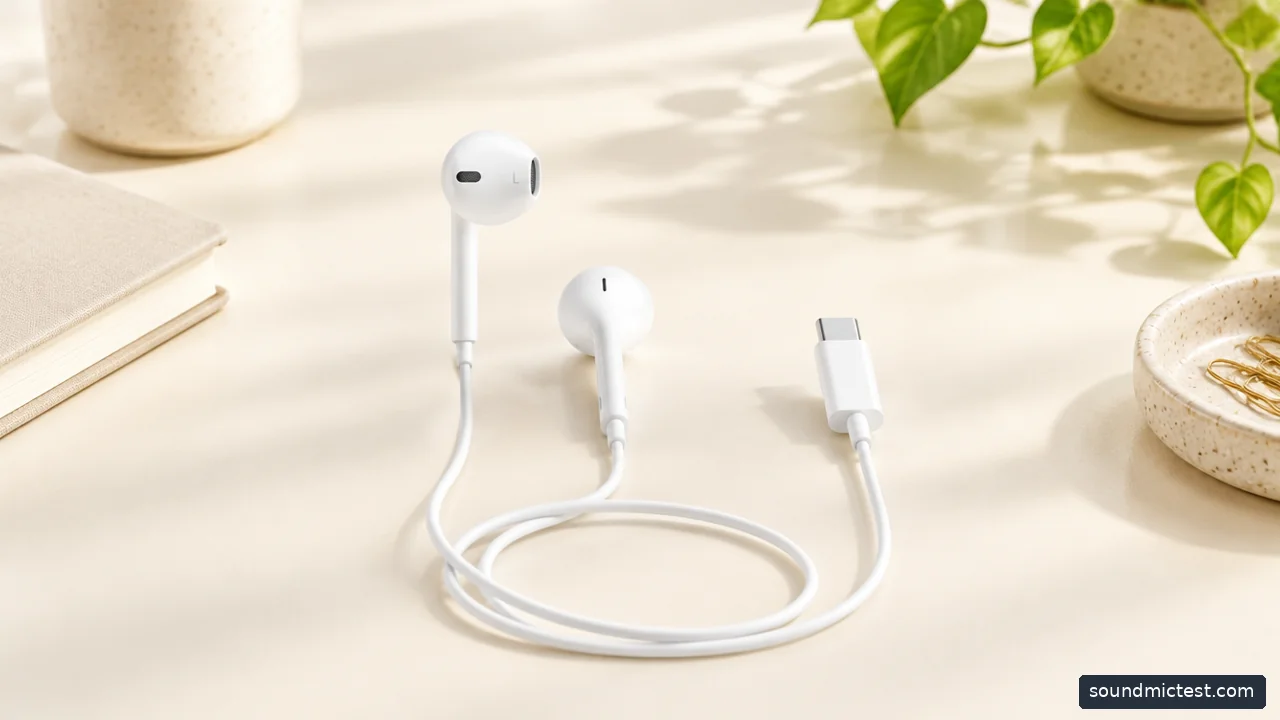
An unsealed earbud shape can feel different from a silicone-tip design. Editorial illustration.
EarPods when you want no sealing tip
Apple EarPods USB-C uses a fixed shell without interchangeable silicone tips. It can be an attractive option for someone who dislikes the plugged feeling of sealed earbuds and uses a compatible device.
The same fixed shape limits adjustment. If the shell presses in the wrong place or falls out, changing a tip size is not available as a remedy. Do not assume a design that suits a friend will suit you. The cable can also pull on the shell if it catches on clothing.
Try the product in the position you normally use: at a desk, while walking indoors or during calls. If it stays comfortable only when you remain perfectly still, it may not solve your everyday problem.
OpenFit 2 for an unobstructed canal
Shokz OpenFit 2 places the speaker beside the ear canal using a hook. This is worth considering when the main discomfort comes from a sealing tip rather than from the weight of the earbud itself.
Check the hook with your usual glasses and hairstyle. Contact pressure can move from inside the ear to the area behind it, and the speaker position needs to remain useful when you turn your head. An open design also leaves surrounding noise audible, which can be inconvenient in a busy office or on a train.
Our open-ear guide explains those listening trade-offs. Choosing an open ear is a change in both fit and isolation, not a free comfort upgrade with every other characteristic preserved.
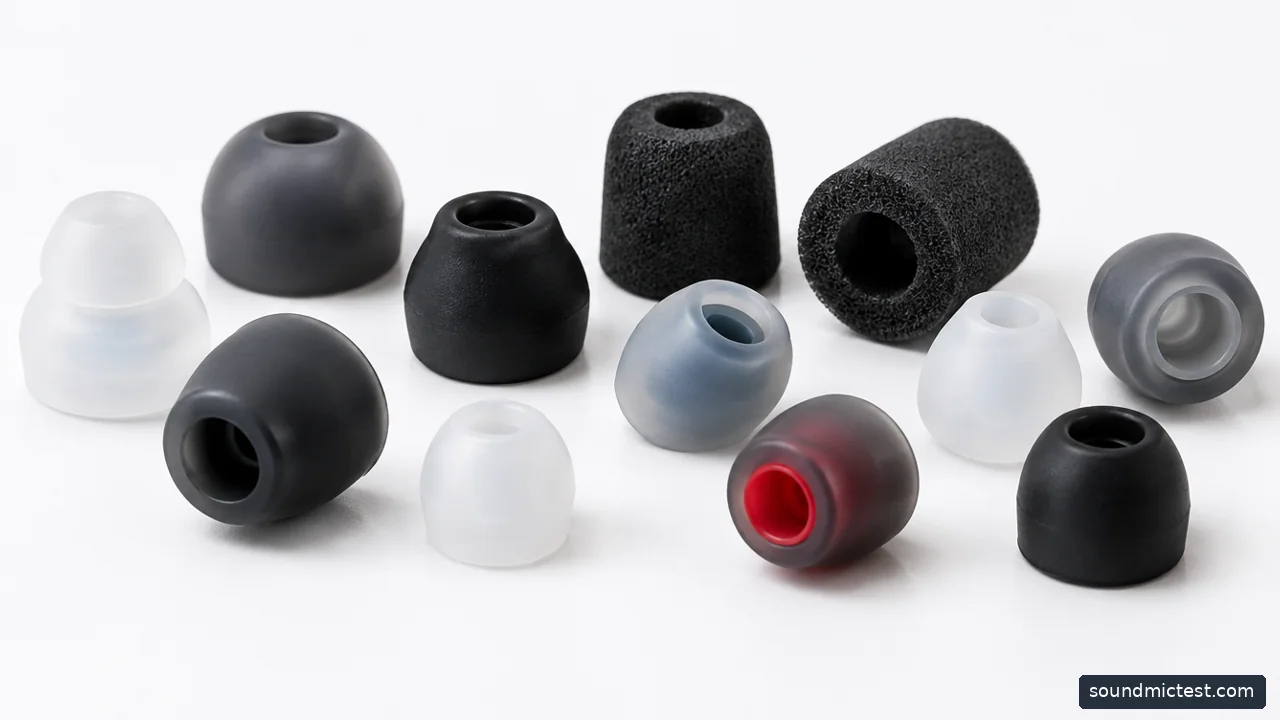
Macro view of assorted silicone and foam ear tips on white surface. Editorial illustration.
IE 200 for a smaller sealed arrangement
The Sennheiser IE 200 is a compact wired in-ear model supplied with different tips. It belongs on a comfort shortlist for people who want a sealed design but find larger wireless shells intrusive.
The cable changes the experience. It removes the need to carry battery electronics in each earpiece, but it introduces routing and handling considerations. Check whether the over-ear cable position works with glasses and whether the lead catches on the desk.
Try the included tips and follow the model's fitting instructions. Do not assume that the smallest tip is always most comfortable or that the largest gives the best sound. The goal is a stable, gentle seal rather than maximum pressure.
Make tip changes methodically
Compare one change at a time. Begin with the supplied tips, check each ear independently and note whether the problem is looseness, pressure or shell contact. If the shell presses against the ear itself, changing tip material may not fix the underlying shape mismatch.
Aftermarket tips must fit the nozzle securely and allow the earbuds to charge properly in their case. A tip that prevents the lid from closing can create a charging problem even if it feels good while worn. Verify compatibility rather than relying only on a similar diameter.
Foam and silicone also have different care routines. Follow the manufacturer's instructions and replace worn parts appropriately. Do not keep using a damaged tip simply because it once provided a comfortable fit.
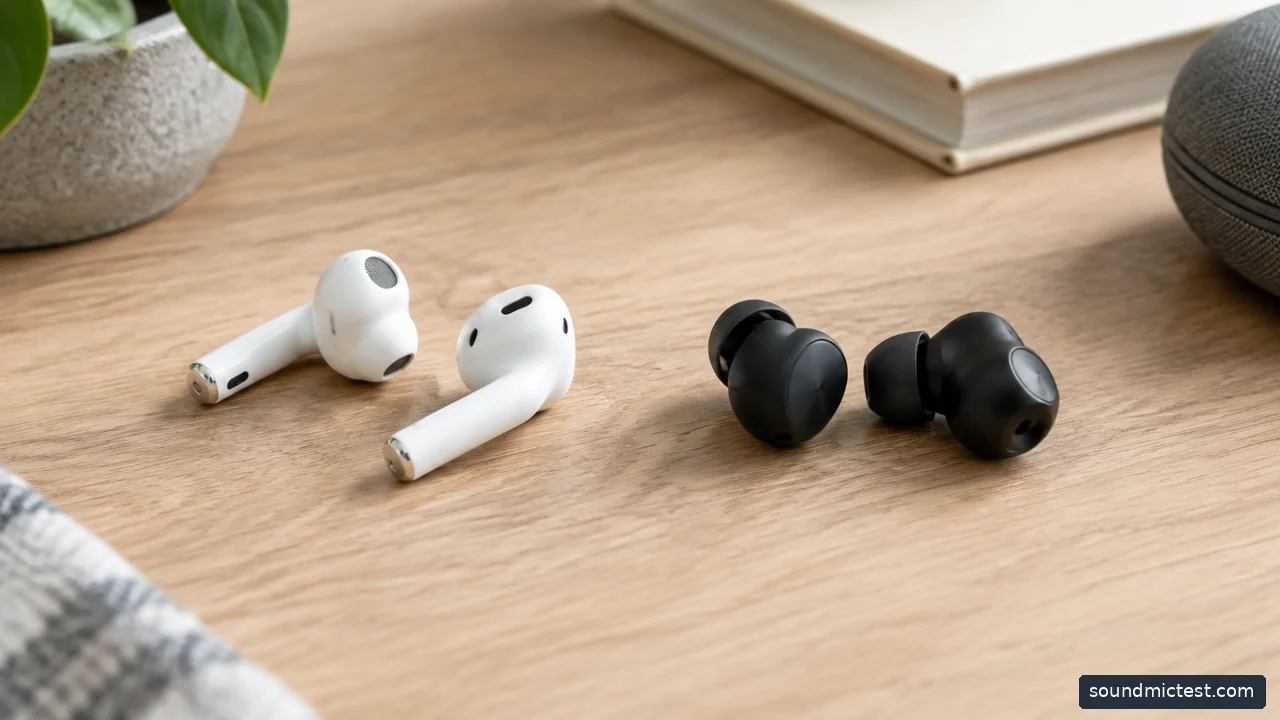
open-fit and sealed in-ear earbuds arranged side by side. Editorial illustration.
Comfort includes controls and listening habits
An earbud can become annoying even without physical pressure if every adjustment triggers a command. Check whether the app allows control changes and whether you can pause or adjust volume without pushing the shell deeper into the ear.
Use a moderate playback level during the trial. If a poor seal makes you keep raising the volume, address the fit rather than treating loudness as the solution. Take the earbuds out when they become uncomfortable, and seek appropriate advice for persistent ear pain or irritation.
The stereo test can confirm both sides play correctly after a tip change. It does not diagnose hearing or measure comfort. If one side sounds different, inspect fit and cleanliness before assuming you need a more expensive product.
Choose by the source of discomfort: EarPods for a compatible open-fit wired option, OpenFit 2 for an unobstructed canal, or a compact IEM such as IE 200 for a smaller sealed arrangement. Use a return policy to evaluate fit honestly. A comfortable earbud should work with your anatomy and routine, not require you to adapt to persistent pressure.