Headphones and earbuds
Best Open-Back Headphones Under $200 for Home Listening
Open-back headphones under $200 are most useful for a quiet home setup where sound leakage is acceptable. They are not travel headphones with a different grille.

James Carter is an editorial pen name for Sound Mic Test's headphone coverage. Articles under this byline focus on comfort, isolation, connectivity and the everyday trade-offs between different headphone designs.
Sound Mic Test editorial pen name.
james.carter@soundmictest.com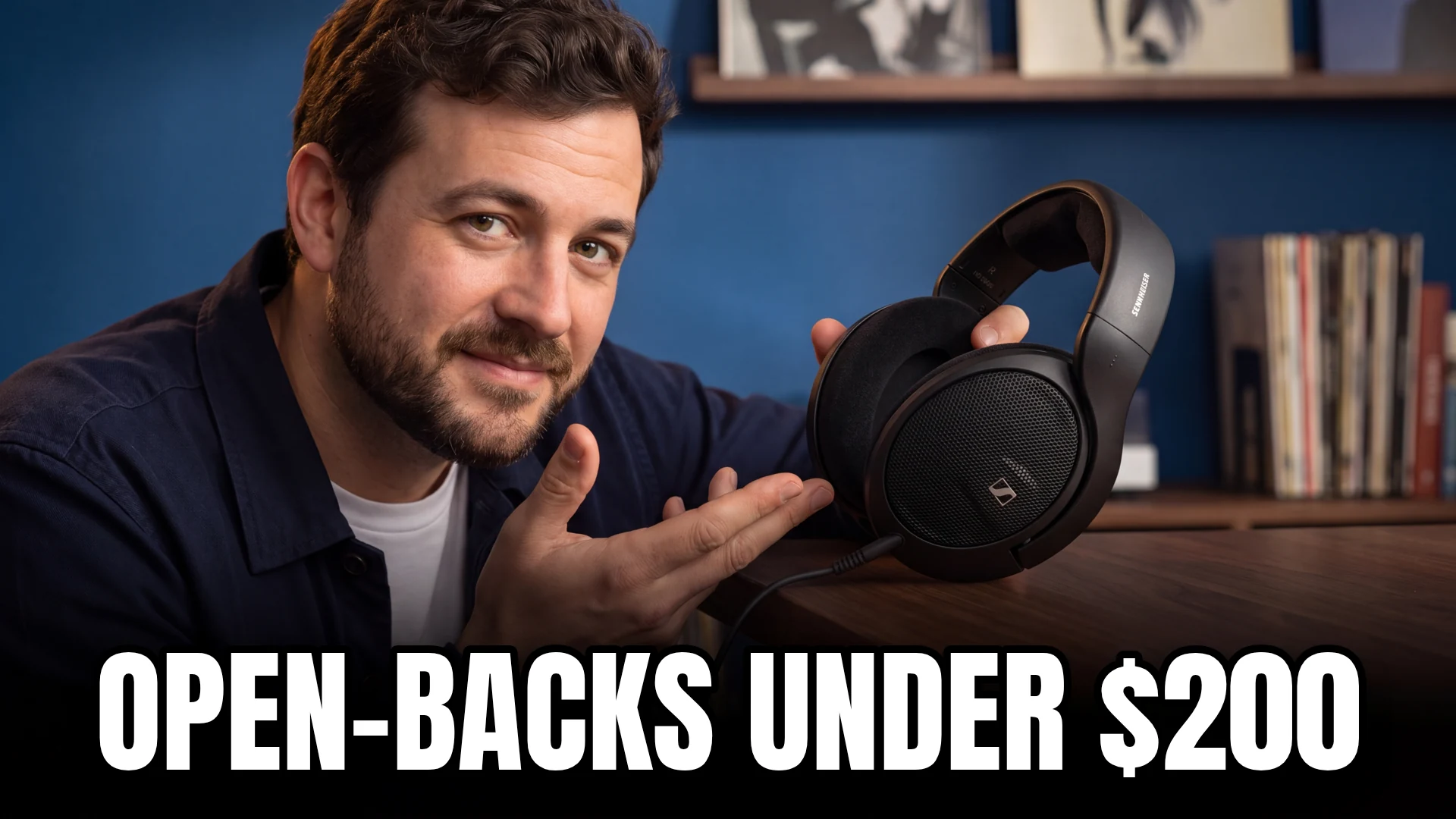
Open-back headphones under $200 are most useful for a quiet home setup where sound leakage is acceptable. They are not travel headphones with a different grille. Before comparing models, make sure the room is quiet enough and the people nearby do not need your music kept private.
Sennheiser HD 560S is the clearest current starting point in this price-focused shortlist: its US store data showed $199.95 before tax and shipping during preparation. Discounted alternatives can be worth investigating, but older popular models may be discontinued or priced above the limit. This guide keeps those conditions explicit rather than treating an old sale price as permanent.
Keep the budget and product status visible
| Candidate | Why investigate it | Budget condition |
|---|---|---|
| Sennheiser HD 560S | Open design and removable cable | Checked at $199.95 before tax and shipping |
| Sennheiser HD 599 | Alternative fit and model family | Only qualifies if a current offer falls below $200 |
| Philips SHP9600 | Established open-back design | Discontinued; assess remaining-stock terms carefully |
| Existing headphone plus setup improvements | May solve the actual problem | Spend only where a clear limitation exists |
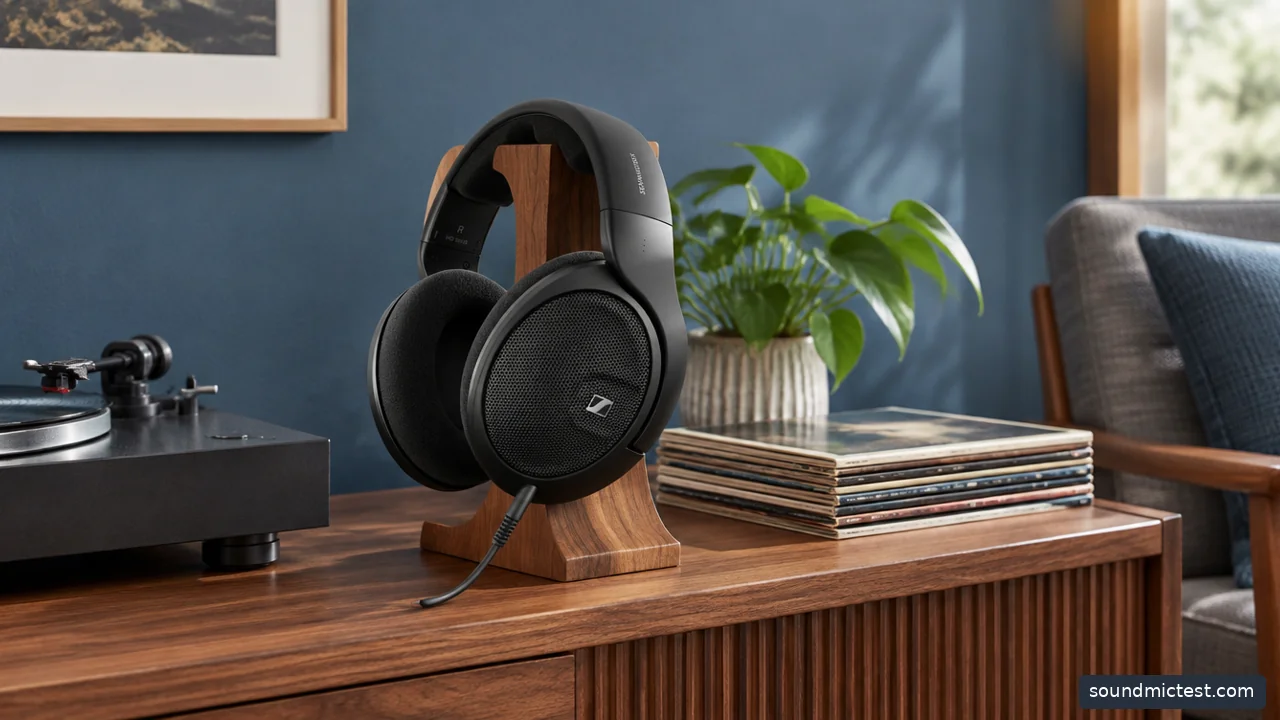
Open-back headphones need a quiet room and a suitable source connection. Editorial illustration.
HD 560S: the straightforward starting point
The HD 560S manufacturer page describes an open-back headphone with a detachable cable and an adapter for larger headphone sockets. That arrangement suits a fixed listening space where you may use a computer, interface or amplifier.
At a price close to the ceiling, leave no ambiguity about the budget. If $200 is your all-in limit, tax, shipping or a required adapter may push the purchase beyond it. Check the final basket rather than treating the product-page price as the entire system cost.
Its open construction is a feature only in the right environment. If you need to block conversation or use a microphone near the cups, leakage and incoming noise may be more important than any advertised acoustic benefit. A closed headphone can be the better purchase even when an open model is widely recommended online.
HD 599 belongs on a conditional watchlist
The HD 599 listing describes another open-back design with large cups and replaceable pads. Its checked manufacturer price was above this guide's ceiling, so it should not be presented as an unconditional under-$200 pick.
If you find a genuine current offer below the limit, compare the fit, included cables and seller terms. Do not assume that an older discount mentioned in a review is still available. Also verify the exact color or special-edition listing, since bundled accessories and sales channels can differ.
The useful reason to consider it is a potentially better fit or a suitable offer, not the idea that a different model number settles sound preference. Try familiar material at comparable levels when a return policy allows a practical comparison.
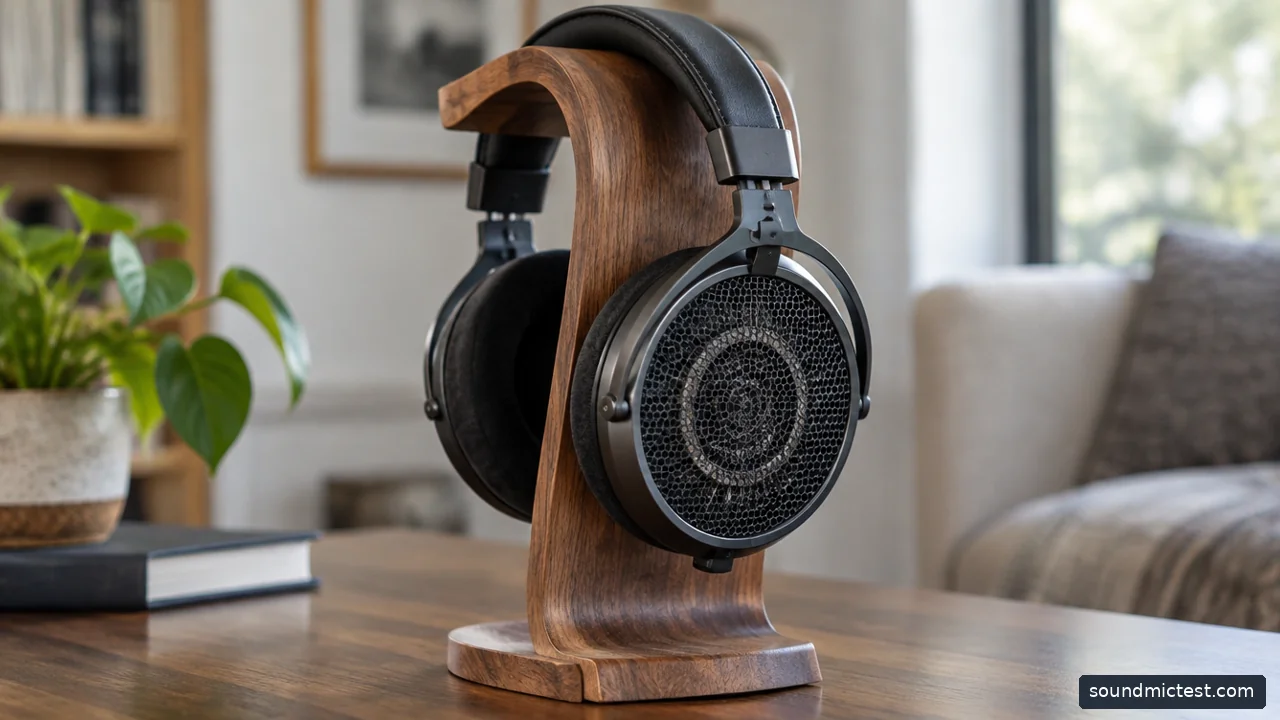
Close side view of generic open-back headphone grille on wooden stand. Editorial illustration.
Be careful with discontinued favorites
Philips marks SHP9600 as discontinued. Remaining stock may still be sold, but availability and support terms deserve more attention than a historical recommendation list gives them.
If you consider one, confirm the seller, warranty, return policy and condition. A product described as new may have spent a long time in storage, while a used pair may need pads or a cable. Add those costs before comparing it with a current alternative.
Do not pay an inflated scarcity price simply because an old review called it affordable. Value is tied to today's complete offer. If the price approaches a current model with clearer support, the original bargain argument may no longer apply.
Do you need an amplifier within the same budget?
Start with your existing source. If it provides comfortable volume with useful adjustment range and no distracting noise, buying another box may not be necessary. If it cannot, reserve money for an appropriate output rather than spending the full allowance on headphones alone.
Impedance is not enough to settle the question. Sensitivity and the source's available voltage and current also matter, and specifications must be compared in compatible units. Avoid a blanket rule that every open-back headphone requires a dedicated amplifier or that every laptop can drive every model equally well.
Our wired-headphone buying guide explains the broader cable and source decision. Keep the system simple until a specific limitation gives you a reason to add equipment.
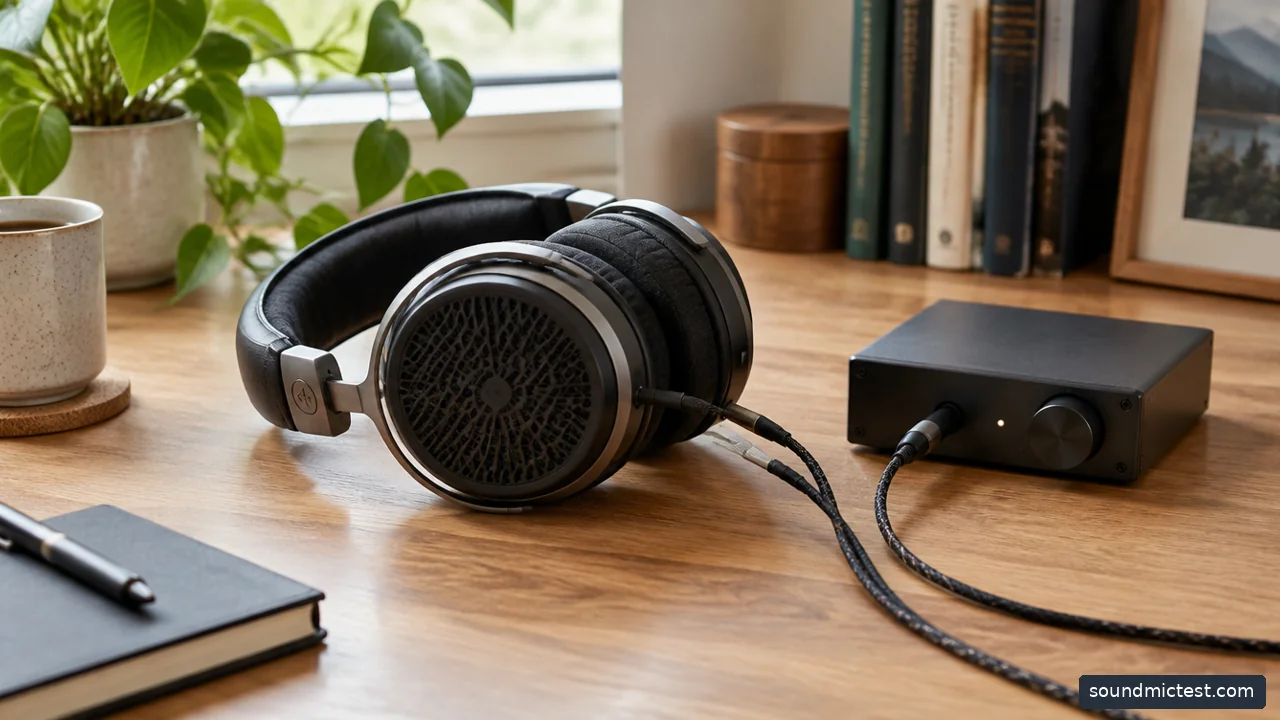
Headphones and a small headphone amplifier on a quiet home desk. Editorial illustration.
Check the room and fit before the sound signature
Try the headphones at your normal desk with the computer fan, nearby appliances and other household activity present. An open design may reveal that the room is noisier than you expected. That is a system mismatch, not necessarily a defect in the headphone.
Wear your glasses and check headband pressure through a short listening session. Confirm left and right playback with the stereo test, then use familiar recordings at a moderate level. The browser tool is a routing check, not an acoustic measurement.
Begin with HD 560S if its current total fits the budget and your room suits an open design. Treat HD 599 as a sale-dependent alternative and SHP9600 as a remaining-stock decision with extra checks. Staying under $200 should mean choosing a complete, usable setup rather than forcing a popular model into a price bracket it no longer occupies.