Headphones and earbuds
Best Workout Earbuds for the Gym, Running and Strength Training
Workout earbuds need to survive movement without turning every set into a fit adjustment. The right design depends on whether you lift, run indoors or move between stations.

Noah Mitchell is an editorial pen name for wireless audio and accessories at Sound Mic Test. Articles explore earbuds, portable audio, cables and the small setup choices that affect everyday listening.
Sound Mic Test editorial pen name.
noah.mitchell@soundmictest.com
Workout earbuds need to survive movement without turning every set into a fit adjustment. The right design depends on whether you lift, run indoors or move between stations. A secure hook, an unobtrusive shell and easy controls are more useful starting points than a dramatic bass claim.
For a sealed fit with an outer anchor, consider Beats Powerbeats Pro 2. For an open canal, compare Shokz OpenFit 2. A conventional sealed earbud can also work if it fits securely, but it should earn that place through a movement check rather than a product category label. These are research-based choices, with comfort and stability left for your own trial.
Match the earbud to the movement
| Training habit | Useful feature | Possible problem |
|---|---|---|
| Treadmill and cardio machines | Secure hook and accessible volume | Sweat can make adjustments awkward |
| Bench exercises | Small shell without a rear band | Earbuds can press against a headrest |
| Group classes | Easy pause and awareness of instructions | Music can mask the instructor |
| Mixed indoor and outdoor sessions | Flexible listening modes | Transparency is not a safety guarantee |
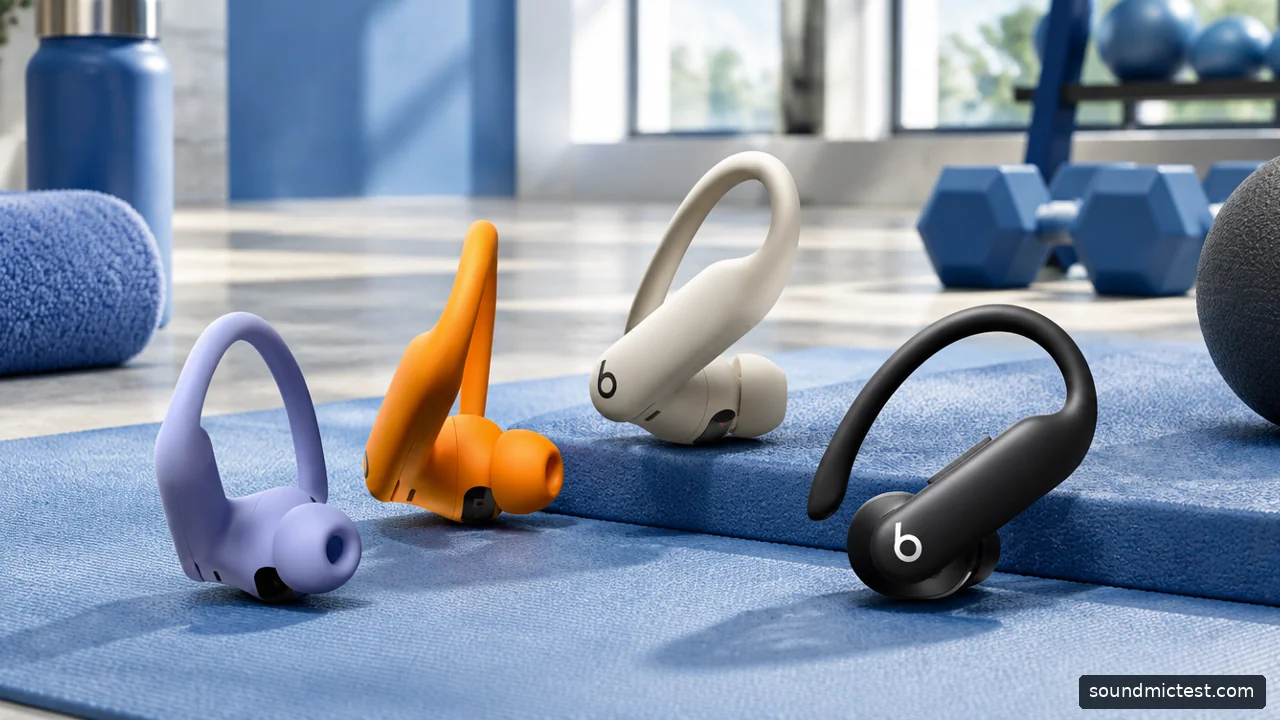
Earhooks help with retention, while the ear tips still determine the acoustic seal. Editorial illustration.
Powerbeats Pro 2 for a sealed sports design
Powerbeats Pro 2 combines silicone tips with earhooks and physical controls. That gives you two fit decisions: the tip should form a comfortable seal, while the hook should stabilize the earbud without creating pressure.
Try the fit while moving your jaw and looking downward, not just while standing in front of a mirror. If you wear glasses, check whether the hook and arm overlap uncomfortably. The earbud can feel secure initially and still become distracting when those contact points remain compressed through a workout.
The ANC and transparency options make the design adaptable, but neither should be left on blindly. In a class, pausing playback can be simpler than trying to hear instructions through competing audio. For outdoor running, see our running-headphone guide, which puts route awareness ahead of gym isolation.
OpenFit 2 for people who dislike sealed tips
The Shokz OpenFit 2 series uses an open-ear hook arrangement and physical buttons. It is a useful alternative when silicone tips feel intrusive or when you want to hear the room without switching an electronic transparency mode.
The compromise is the room itself. Loud gym music and nearby equipment can compete directly with your playlist. Do not treat an open-ear speaker as a sealed earbud with all the isolation benefits retained. If you need more volume than feels comfortable to follow a podcast, choose a quieter time or pause the audio.
Check the exact OpenFit version before comparing features. Case charging and other options differ across the range. Buying the model in a discounted listing is reasonable only when you know which features you are giving up or gaining.
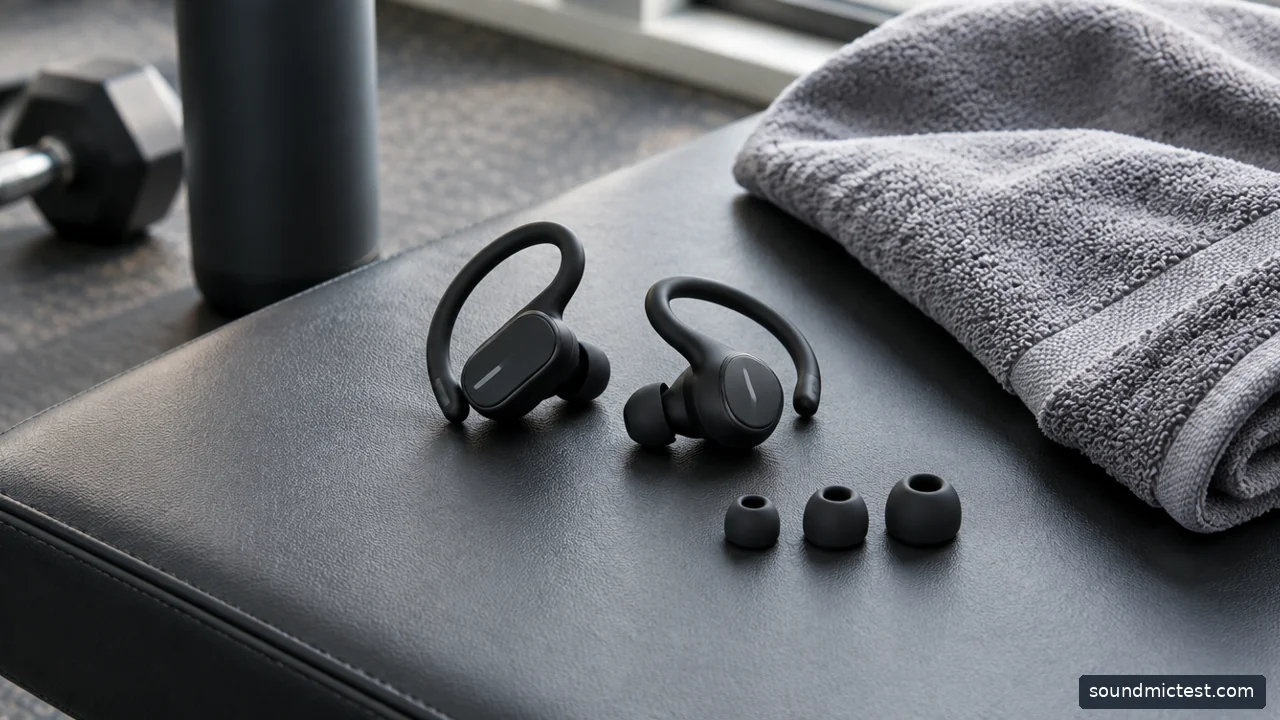
sport earbuds and three ear tip sizes beside a gym towel. Editorial illustration.
A standard earbud can work, but fit must lead
You do not automatically need a specialized sports model for strength training. A compact conventional pair may work well if it stays seated during your actual movements and has an appropriate manufacturer-stated resistance rating. The difficulty is predicting that from a photograph.
Before the first gym session, try gentle squats, a forward bend and a short walk indoors. If the earbud loosens immediately, changing tips may help. If the shell itself presses against the ear, a different tip may not solve the geometry. Do not keep forcing an uncomfortable design into place because it has more features than the alternative.
For Apple users, the current AirPods Pro specifications are a starting point for compatibility and resistance information. Keep the generation explicit; older cases and earbuds do not necessarily share the same rating or functions.
Controls and charging are part of gym usability
Try skipping a track and adjusting volume with slightly damp hands before deciding whether a control system suits you. You should not need to remove a phone from your pocket repeatedly just to pause a conversation. Also check whether touching the earbud to reseat it triggers an unwanted command.
Keep the charging case away from wet clothing. The case is not automatically protected to the same standard as the earbuds. Follow the manufacturer's drying instructions before returning damp earbuds to their charging contacts, and clean them using the recommended method rather than improvising with strong cleaners.
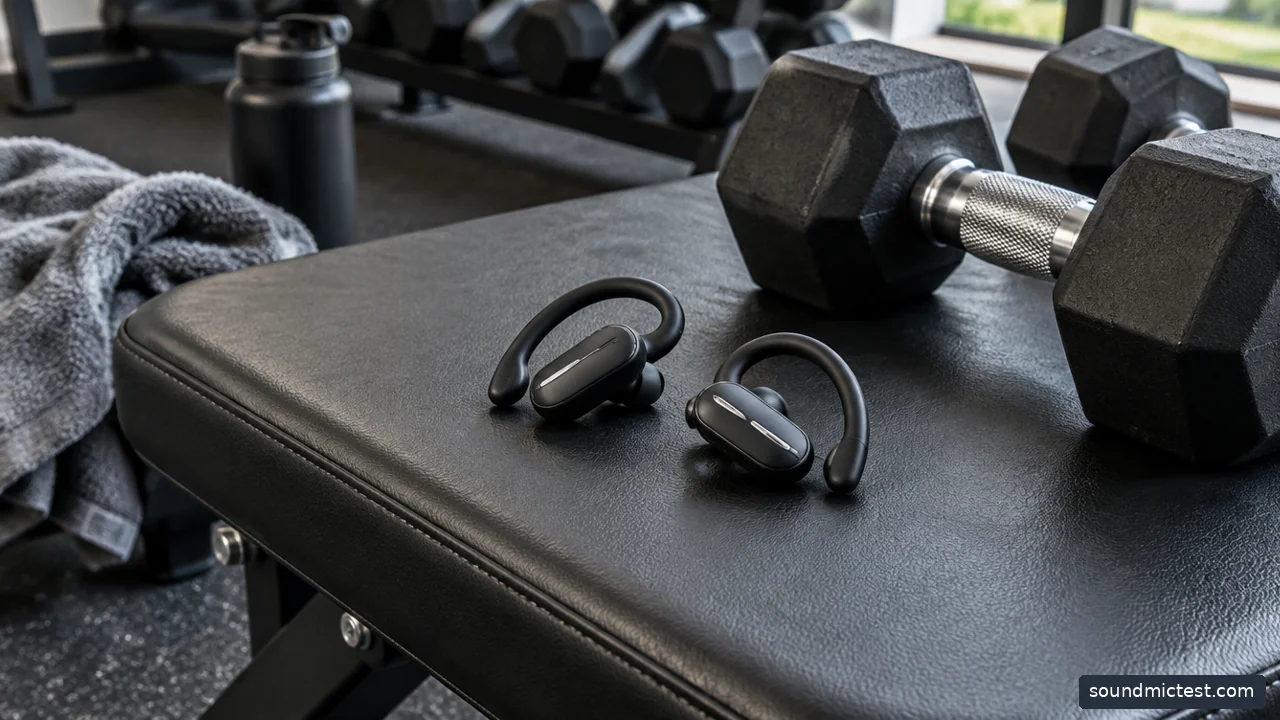
Earhook earbuds resting next to dumbbells on a gym bench. Editorial illustration.
Verify the basics before blaming the product
Use the stereo test to confirm that both earbuds play through the selected output. If you take calls between sessions, make a short microphone recording in a quiet place first. A browser input-selection problem can otherwise look like a defective microphone.
These checks do not establish sweat resistance or gym call quality. For that, the manual and your actual calling app matter. Keep battery comparisons tied to a single charge and the listening mode you plan to use, rather than the case's combined total.
Choose sealed hooks when anchoring and isolation are priorities, open-ear hooks when an unobstructed canal matters more, and ordinary earbuds only after a convincing movement check. A successful workout earbud should need little attention once the session starts, leaving you free to concentrate on the exercise rather than the equipment.