Headphones and earbuds
Best Wireless Earbuds: How the Main Options Compare
The best wireless earbuds depend on the phone you use, the way the shells fit and what you expect them to do beyond music. A commuter, a runner and someone switching between a laptop and phone can reasonably choose different pairs.

Noah Mitchell is an editorial pen name for wireless audio and accessories at Sound Mic Test. Articles explore earbuds, portable audio, cables and the small setup choices that affect everyday listening.
Sound Mic Test editorial pen name.
noah.mitchell@soundmictest.com
The best wireless earbuds depend on the phone you use, the way the shells fit and what you expect them to do beyond music. A commuter, a runner and someone switching between a laptop and phone can reasonably choose different pairs. One universal winner hides those differences more often than it resolves them.
AirPods Pro 3 is a logical starting point for a supported Apple setup. Sony WF-1000XM6 offers a broad documented feature set for a more platform-flexible comparison. JBL Tune Beam 2 provides another mainstream option, while open-ear designs serve a different fit preference. This guide is a research-based shortlist, not a claim that all products were measured on the same test bench.
A shortlist by need
| Need | Starting point | Main question |
|---|---|---|
| Apple-device integration | AirPods Pro 3 | Does the sealed fit suit you? |
| Codec and connection flexibility | Sony WF-1000XM6 | Which functions does your phone support? |
| App controls and multipoint | JBL Tune Beam 2 | Does the control layout fit your habits? |
| Unobstructed ear canal | Shokz OpenFit 2 | Can you accept less isolation? |
| Secure sports fit | Hook-based sport earbuds | Do hooks work with your glasses and ears? |
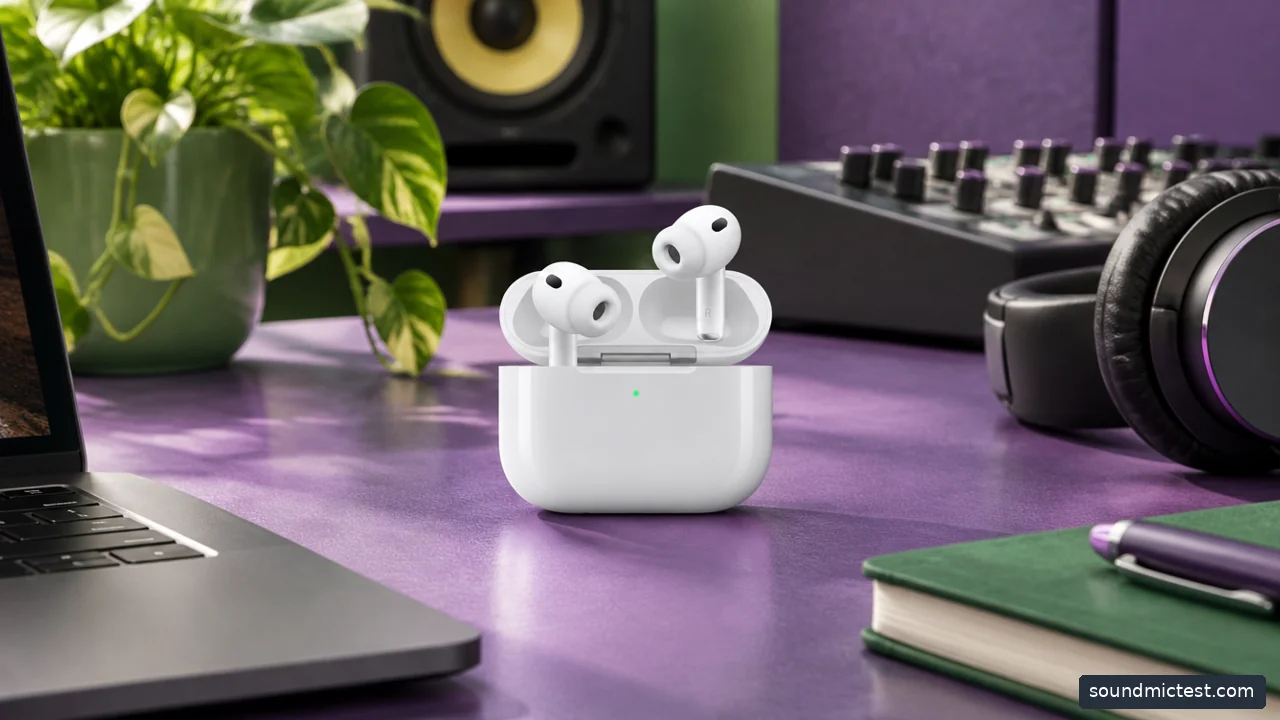
Wireless earbud choices depend on fit, phone compatibility and the features you will use. Editorial illustration.
AirPods Pro 3 for supported Apple routines
AirPods Pro 3 combines a sealed tip design with Apple-focused listening and integration features. The useful reason to choose it is the way those functions fit a supported device routine, rather than the assumption that the brand alone establishes superior sound.
Read the requirements for the features you care about. Software version, region and device support can matter. A function advertised on the latest iPhone should not automatically be promised on an older phone or a non-Apple computer.
Fit remains the deciding factor. If the sealed feeling is uncomfortable, compare a different design before paying for features you will avoid using. Our iPhone-earbud guide develops the Apple and third-party comparison in more detail.
Sony WF-1000XM6 for feature flexibility
Sony's WF-1000XM6 specifications list multipoint and several Bluetooth audio formats. Those options are useful only when the source and selected operating mode support them.
Do not treat the most advanced codec label as a compulsory setting. If the connection becomes unreliable in your environment, a more stable mode can be the better practical choice. The recording, fit and surrounding noise can matter more than a theoretical transmission advantage.
At a premium price, identify the features you will actually use. Someone listening mainly to spoken audio in a quiet room may not need the same equipment as a frequent traveler who values noise control and device switching.
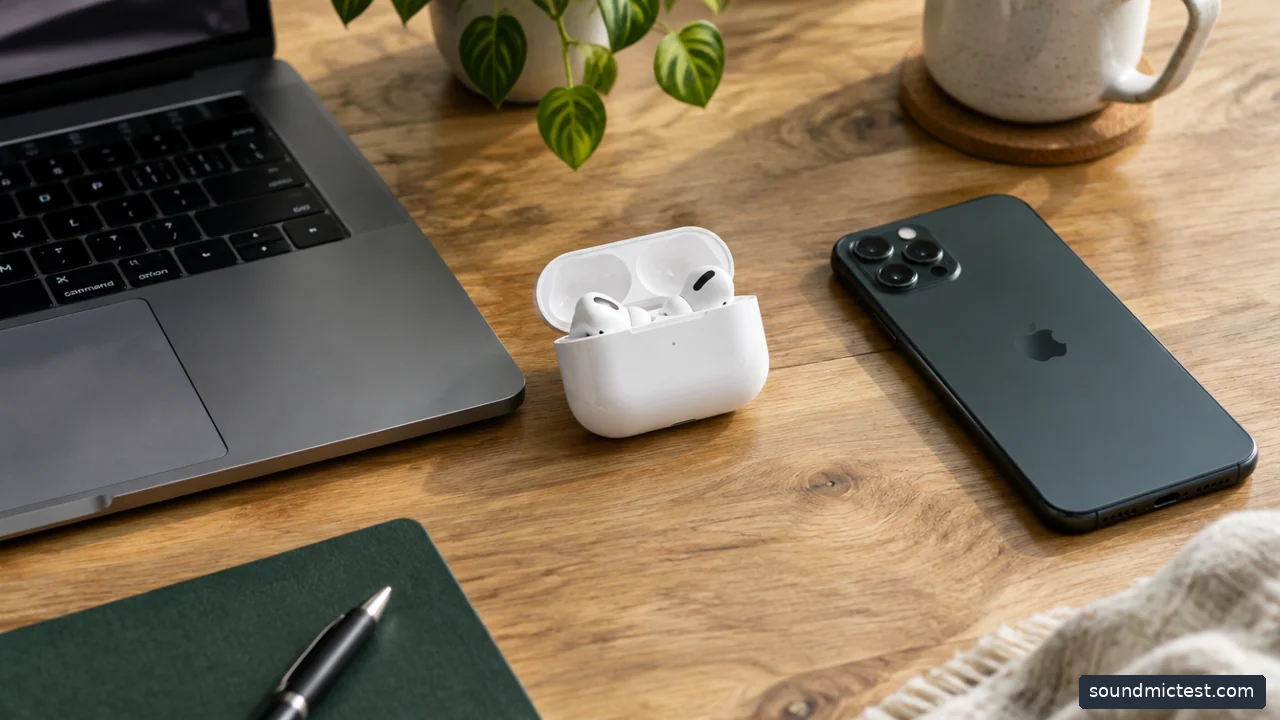
Earbuds in an open case beside laptop and phone facing down. Editorial illustration.
JBL Tune Beam 2 for a mainstream alternative
Tune Beam 2 includes app support, adaptive noise cancellation and multipoint. It is worth comparing when you want those everyday functions without assuming that your earbuds must come from the same company as your phone.
Test the control layout and the switch between devices. Remembered pairing history is not the same thing as an active connection to two sources. Check what happens when a call arrives during laptop playback and how the earbuds return to the original source.
Keep the current price in the comparison. A product can be good value during one offer and less compelling beside a discounted competitor. Our budget-earbud guide explains where lower-cost models may be sufficient.
Open-ear and sport designs solve different problems
The Shokz OpenFit 2 range leaves the canal unobstructed. That can appeal to people who dislike sealing tips, but surrounding noise remains part of the listening experience. It is not a direct replacement for ANC during a loud commute.
Sport earhooks add another way to stabilize an earbud. They can also create pressure around glasses or make a case larger. Choose them because they solve a movement problem, not because every workout-related feature is essential for ordinary listening.
Do not buy a specialized design from one favorable photograph. Try it with your clothing, glasses and usual posture, and use the return period to decide whether the fit works beyond the first few minutes.
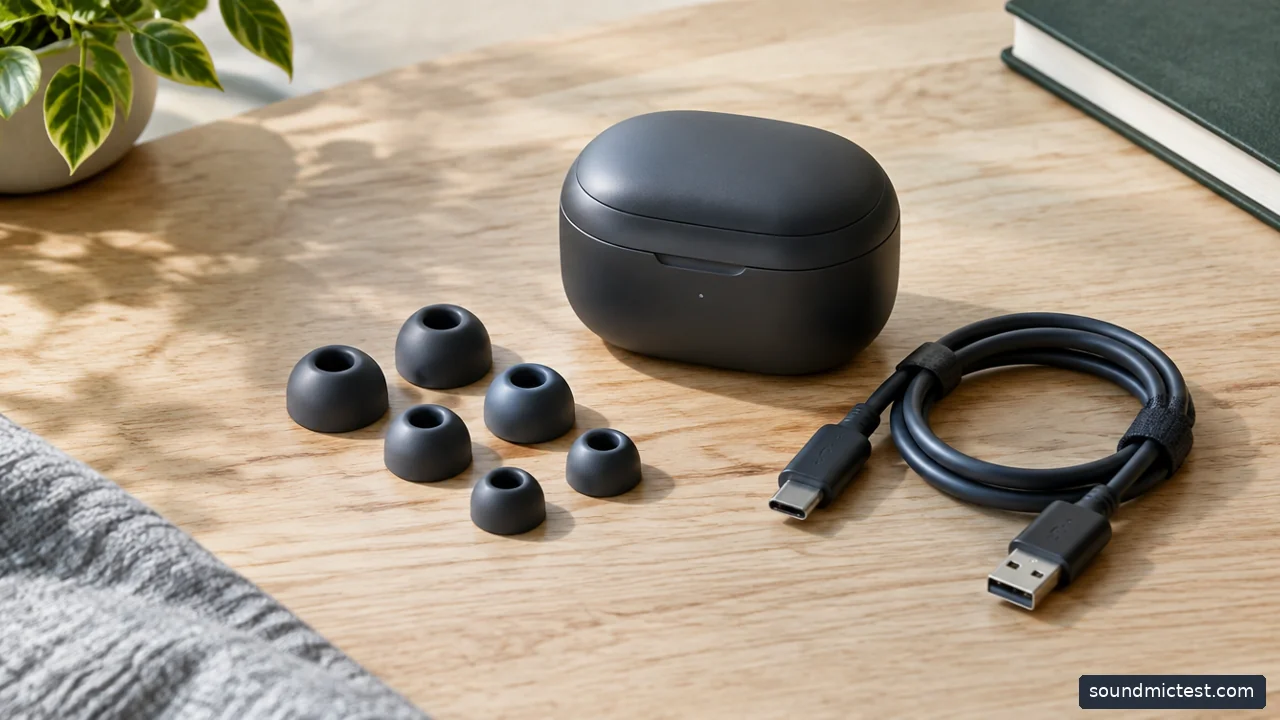
Silicone tips beside a portable earbud case and charging cable. Editorial illustration.
Compare battery claims and call behavior fairly
Separate single-charge runtime from the case total. Then compare equivalent modes: ANC, spatial processing and other functions can change the result. Leave a margin for real use instead of planning a trip around the final advertised minute.
For calls, confirm the intended microphone with the microphone test, then test the actual calling app. Browser routing and application processing are different parts of the chain. A successful recording in a quiet room does not prove performance in wind or a crowded cafe.
Finally, check replacement tips, cleaning instructions and case charging. These small ownership details become important when earbuds are used every day. A feature-rich pair is less useful if the case is awkward, one bud fails to charge reliably or the fit needs constant adjustment.
Choose the product whose fit and supported features match your routine. AirPods Pro 3 suits an Apple-focused setup, Sony offers a flexible feature comparison, JBL is a mainstream alternative, and open-ear models serve a distinct comfort preference. The best wireless earbud is the one that makes daily listening easier without asking you to tolerate the wrong physical design.