Headphones and earbuds
Best Wired Earbuds for Phones, Laptops and Music Players
Wired earbuds still make sense when you want a small, dependable listening setup without another battery to charge. The best choice depends first on the socket you have, then on whether you want a sealed ear canal, an open fit or a microphone for calls.

James Carter is an editorial pen name for Sound Mic Test's headphone coverage. Articles under this byline focus on comfort, isolation, connectivity and the everyday trade-offs between different headphone designs.
Sound Mic Test editorial pen name.
james.carter@soundmictest.com
Wired earbuds still make sense when you want a small, dependable listening setup without another battery to charge. The best choice depends first on the socket you have, then on whether you want a sealed ear canal, an open fit or a microphone for calls. Buying an expensive pair before answering those questions can leave you paying for adapters and replacement cables on day one.
For a straightforward USB-C connection, start with Apple EarPods or the USB-C version of FiiO's JD1. For a traditional headphone socket and a removable cable, consider the Moondrop CHU II. Sennheiser's IE 200 is the more expensive option for listeners who want a compact shell and adjustable tip positioning. These are research-based recommendations from manufacturer documentation, selected for different jobs rather than ranked by an invented listening score.
The shortlist by connection
| Option | Main reason to consider it | Check before buying |
|---|---|---|
| Apple EarPods USB-C | Open fit and an inline remote | Your device's compatibility and whether the shell stays put |
| FiiO JD1 TC | Digital USB-C connection | Buy the TC version, not the analog JD1 |
| Moondrop CHU II | Replaceable cable and sealed fit | Standard model uses a 3.5mm plug |
| Sennheiser IE 200 | Compact in-ear design and replaceable cable | Adapter and microphone requirements |
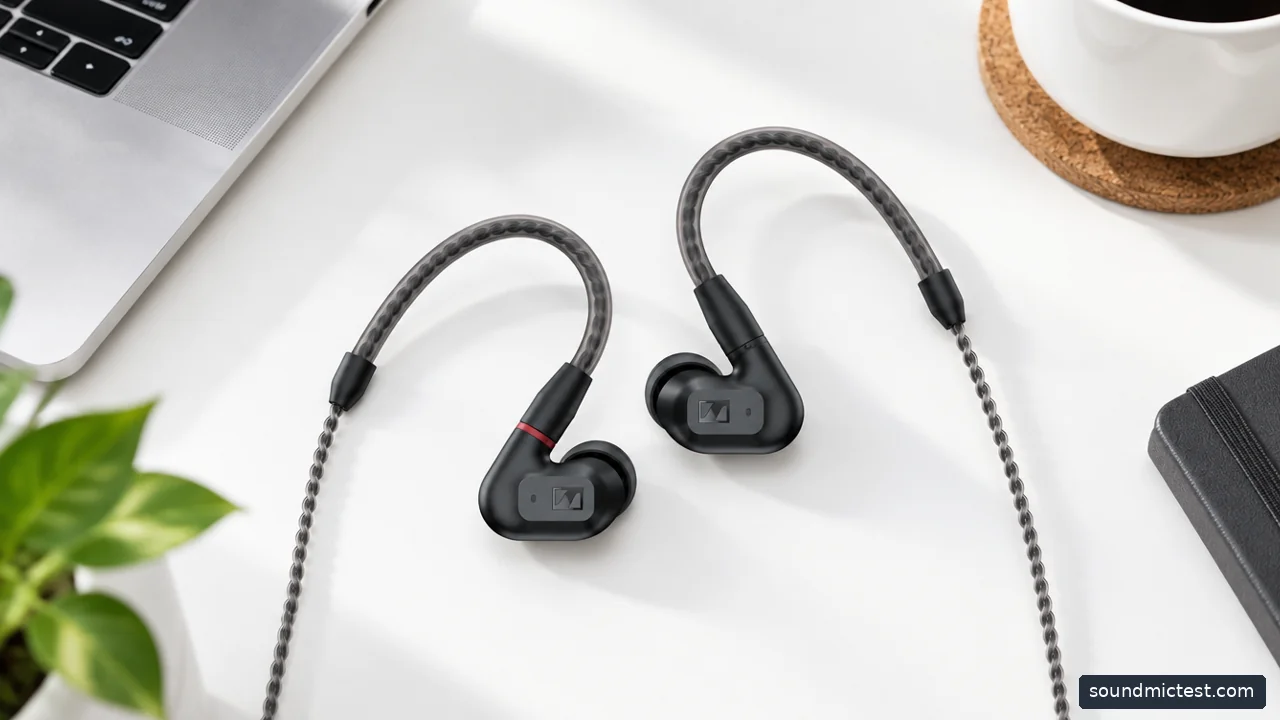
The IE 200 uses a wired connection and replaceable tips; check the source socket before buying. Editorial illustration.
EarPods: the uncomplicated option for compatible Apple devices
Apple's USB-C EarPods include a remote for playback, volume and calls. Their hard shell sits at the entrance of the ear rather than relying on a silicone tip to seal it. That is useful if you dislike the plugged sensation of in-ear monitors.
The trade-off is fit flexibility. You cannot swap to a larger tip if the shell feels loose, and the open design lets surrounding noise compete with the music. Choose them for a quiet desk, calls and occasional listening, rather than expecting the isolation of a sealed earphone. Apple's compatibility list is the right starting point for supported operating systems. A USB-C socket alone does not establish that every remote function works on every device.
FiiO JD1: choose the connector before the color
The FiiO JD1 family has both analog and USB-C versions. The JD1 TC contains its digital conversion hardware in the USB-C connection; the ordinary JD1 uses a 3.5mm plug. Both are in-ear designs with detachable cables.
This distinction matters more than the high-resolution badge. The TC model can simplify a phone setup without a headphone socket, while the analog version is easier to move between an audio interface, a music player and a conventional headphone output. Verify the selected cable's microphone and remote functions if calls matter. Product listings that combine several connector options can make the wrong version surprisingly easy to order.
CHU II and IE 200: two ways into replaceable-cable earphones
Moondrop's CHU II uses a two-pin cable connection and replaceable acoustic filters. Its appeal is practical: a damaged cable need not mean replacing the entire earphone. Check the connector housing as well as the pin specification before ordering a replacement, and do not confuse this analog model with a separately listed DSP version.
The Sennheiser IE 200 uses a different cable system. Its supplied tips can sit in two positions to change the low-frequency response. Treat that as an adjustment to explore, not a promise that either position will suit every ear. The standard listening cable also should not be mistaken for a complete headset solution with a boom microphone.
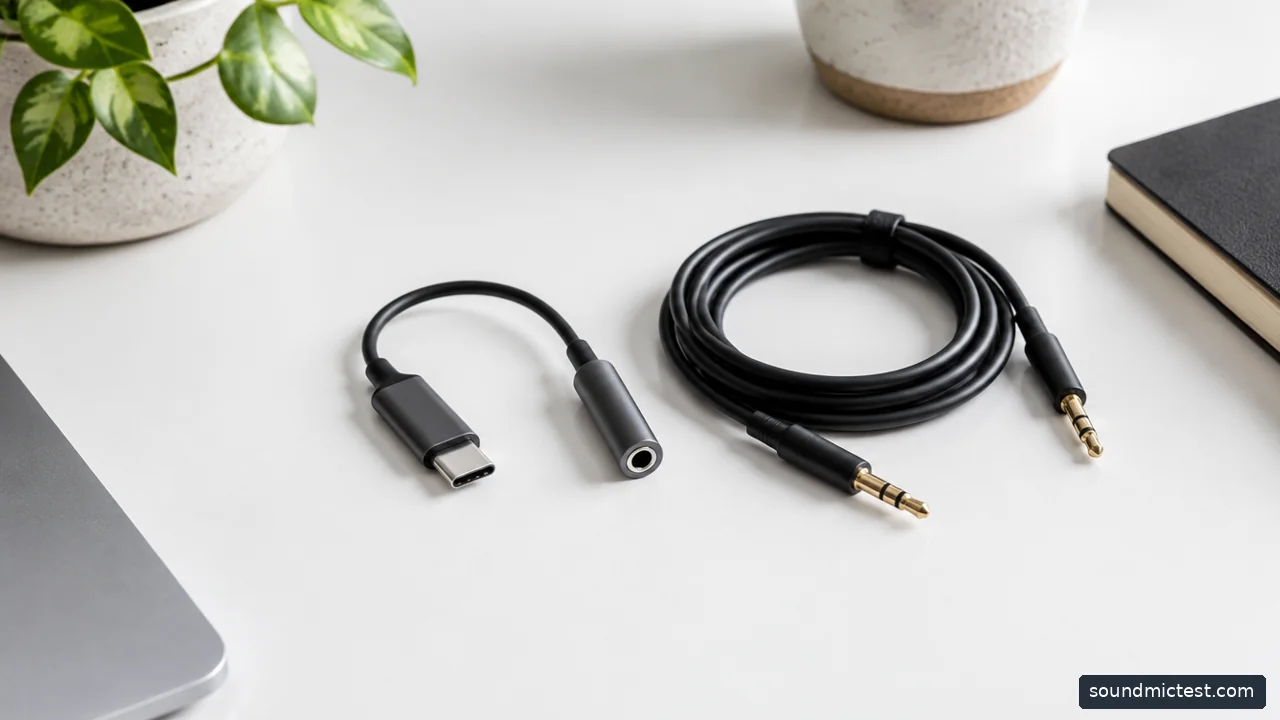
A USB-C audio adapter beside a coiled 3.5mm cable on white desk. Editorial illustration.
Avoid the adapter trap
A phone with USB-C may need an adapter containing a digital-to-analog converter for 3.5mm earphones. A passive adapter is not universally supported. If you also need calls, confirm that the adapter accepts microphone input rather than providing headphone playback only.
Laptop sockets deserve the same attention. A combined headset jack and separate microphone and headphone sockets are different arrangements. Check the computer's manual before buying a splitter. An adapter can route a microphone signal that already exists; it cannot add a microphone to a listening-only cable.
After connecting, use the stereo test to check left and right playback. For a cable with a microphone, make a short recording with the microphone test and confirm the browser selected the intended input. These are functional checks, not measurements of sound quality.
Fit is part of the purchase
Try the included tips before deciding that an in-ear model lacks bass. A poor seal can change the sound substantially. Start with a comfortable size, compare both ears independently and avoid forcing a larger tip into place. Also check cable routing: an over-ear cable can stay out of the way at a desk but take longer to put on than a straight-down design.
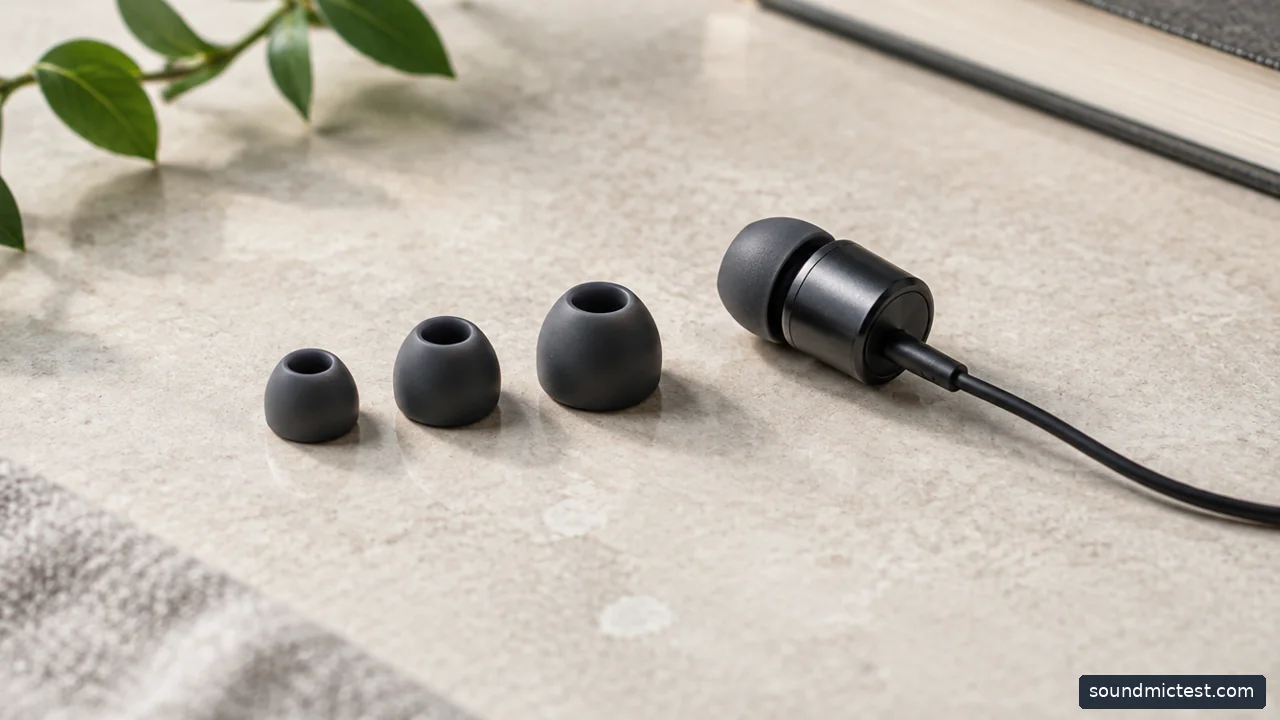
Three sizes of silicone ear tips beside an unbranded wired earbud. Editorial illustration.
For a music player, check how the cable exits the socket and whether it fits inside your case. For a laptop, consider the distance between the socket and your normal sitting position. A cable that is technically compatible can still be frustrating if it pulls every time you turn your head.
Choose EarPods for an open fit and simple compatible-device calls, JD1 TC for a direct USB-C route, or CHU II for a replaceable-cable analog setup. Spend more on IE 200 only when its fit and cable arrangement address a specific need. The best wired earbud is the one that works with your actual source without becoming a pocketful of adapters.