Headphones
Best Headphones for Working Out: Fit, Sweat and Stability
Compare sports earhooks, open-ear designs and compact earbuds by stability, fit, care and the activity you actually do.

Noah Mitchell is an editorial pen name for wireless audio and accessories at Sound Mic Test. Articles explore earbuds, portable audio, cables and the small setup choices that affect everyday listening.
Sound Mic Test editorial pen name.
noah.mitchell@soundmictest.com
Workout headphones fail in ordinary ways. An earbud works loose during a set, a control becomes awkward with damp fingers, or the charging case ends up next to sweaty clothing. A product can be excellent for a train journey and still be the wrong companion for exercise.
Start with the kind of movement and the environment. Powerbeats Pro 2 is worth considering for an earhook design with a sealed ear tip. Shokz OpenRun Pro 2 takes an open-ear approach. AirPods Pro 3 is another option for a compatible Apple setup, provided its fit stays secure during your activity. This is a documentation-based buying guide, not an account of workouts performed with these products.
Three designs to consider
| Product | Main design reason to consider it | Main purchase check |
|---|---|---|
| Powerbeats Pro 2 | Earhooks plus in-ear tips | Pressure around the ear and stability during movement |
| Shokz OpenRun Pro 2 | Open-ear wraparound format | Fit with glasses, hats and your chosen activity |
| AirPods Pro 3 | Compact in-ear format and Apple integration | Whether the tips remain secure without an earhook |
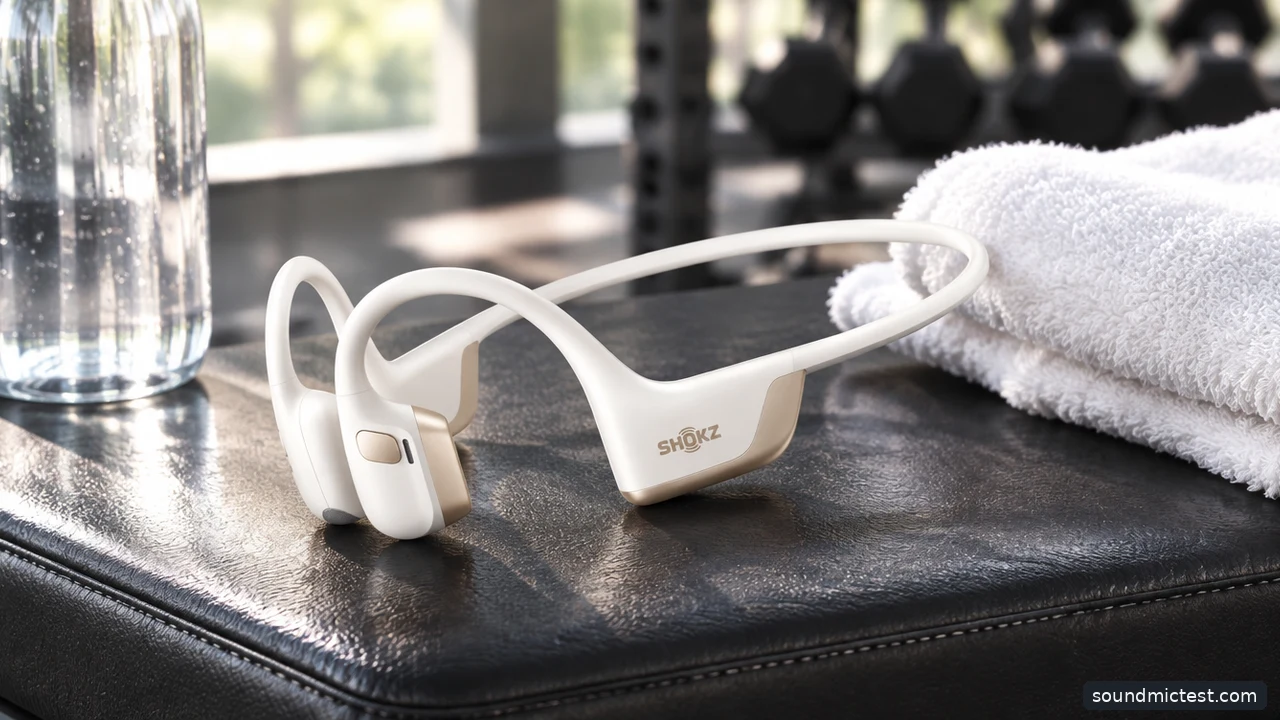
Match the physical design to the workout. Editorial illustration.
Powerbeats Pro 2: earhooks are useful, but fit still matters
The Powerbeats Pro 2 support instructions explain how to position the earhook and rotate it into place. That extra support is a reason to shortlist the model if ordinary earbuds gradually work loose.
An earhook does not remove the need to choose the right tip. The hook provides support around the ear, while the tip affects the seal and comfort inside it. Try the fit while moving your jaw and turning your head. If you wear glasses, check whether the two frames compete for the same space behind the ear.
Beats rates the earbuds IPX4 for sweat and splashes. That is not a swimming rating. The practical trade-off is also physical: an earhook design needs more room than a tiny stem earbud. Check that the charging case fits the pocket or bag you take to the gym.
Shokz OpenRun Pro 2: keep the ear canal open
The OpenRun Pro 2 product information describes an open-ear sports design with an IP55 rating. It is a useful alternative for people who dislike a sealed tip during exercise or want a different physical relationship with surrounding sound.
Leaving the ear canal open does not guarantee awareness in every environment. Playback can still distract you or mask something important. Choose a modest level and pause when the situation requires attention. Open-ear listening is a design choice, not a substitute for looking and listening carefully around traffic.
The wraparound band also needs a fit check. Try it with the hat, helmet or glasses you normally use, following the relevant equipment guidance. Make sure the back of the band does not interfere with a bench or headrest during your chosen workout. Shokz explicitly says this model is not for submersion, so choose equipment designed for swimming if that is your activity.
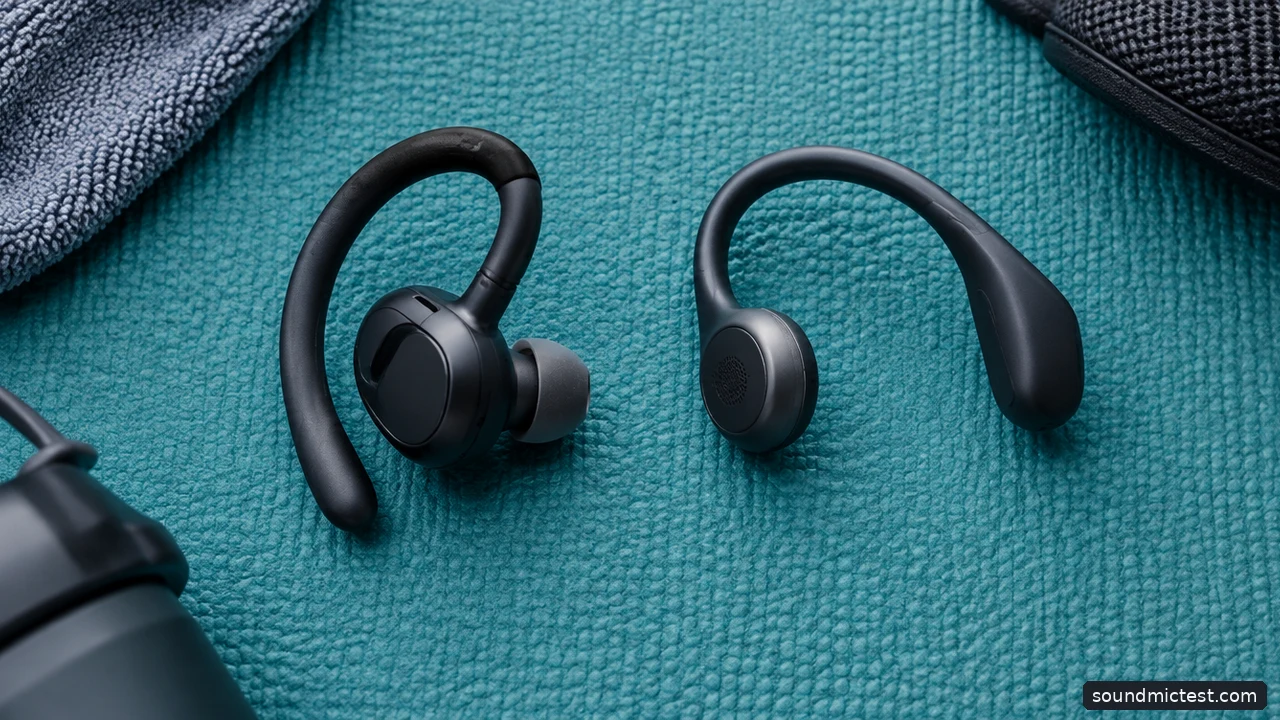
Earhooks and open-ear designs solve different fit problems. Editorial illustration.
AirPods Pro 3: convenient if the fit survives your routine
Apple's specifications list multiple ear-tip sizes and describe the model's water- and dust-resistance conditions. Read those conditions and care instructions rather than treating a resistance rating as permission to charge wet earbuds or ignore wear over time.
For someone already using compatible Apple devices, the appeal is one compact pair for ordinary listening and exercise. The limitation is simple: there is no external earhook to compensate for a poor fit. Test the actual movements you perform in a safe indoor space before committing to the model for running or high-movement sessions.
Do not choose fitness features before basic comfort. A useful earbud must stay in place without constant adjustment. If the shape does not suit your ears, a different form factor is more sensible than repeatedly forcing a tighter seal.
A useful fit test takes more than standing still
Start with clean, dry earbuds and follow the manufacturer's fitting instructions. Walk, look over each shoulder and perform a few controlled versions of your normal movements. Check whether a cable, headband or earhook touches clothing and whether that contact becomes distracting.
Try the controls while stationary. Can you pause without dislodging the earbud? Can you change volume reliably? An interaction that is slightly awkward at a desk may become much more annoying during exercise. Avoid learning a complicated gesture while moving near hazards.
For gym sessions, consider how much isolation you actually want. Some people prefer a sealed earbud to reduce background distraction; others want to hear a trainer or nearby conversation more readily. Neither approach is universally better, and an ambient mode should be evaluated as a convenience rather than a safety guarantee.
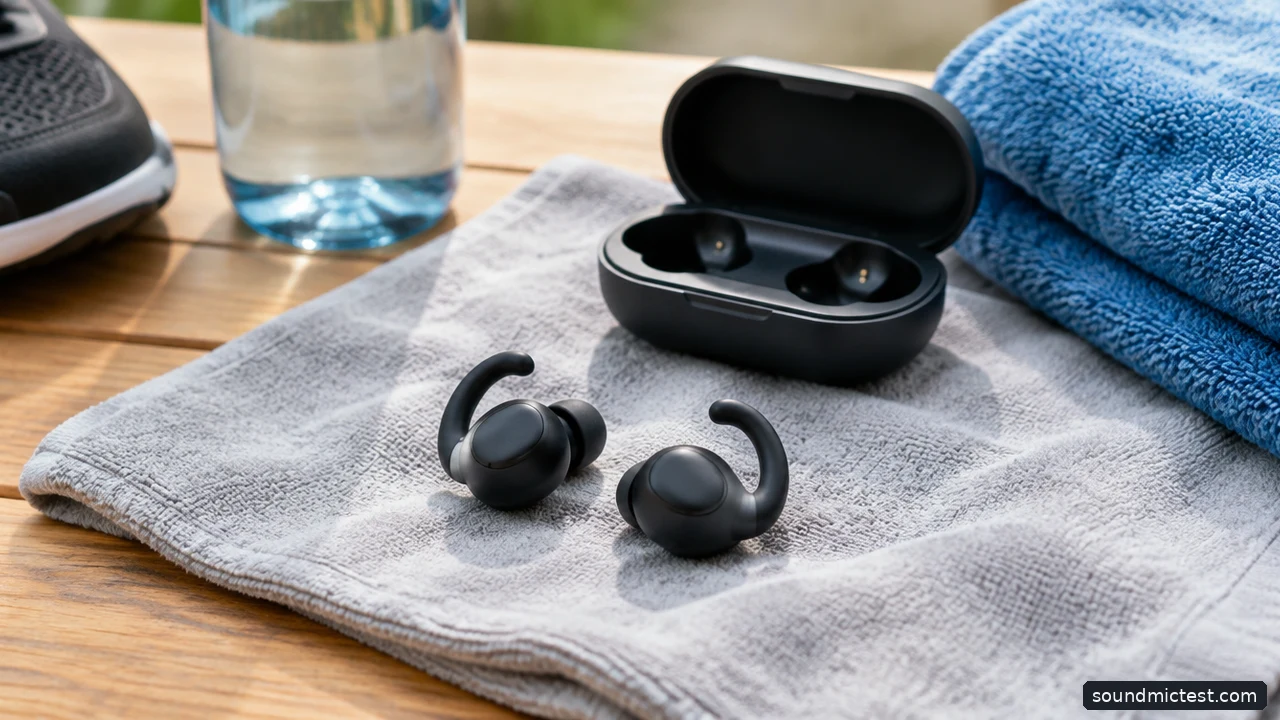
Follow the drying instructions before returning earbuds to their case. Editorial illustration.
Sweat resistance is not a complete care routine
Follow the manufacturer's cleaning and drying instructions after use. Keep the earbuds out of the charging case until they are appropriately dry, and keep charging contacts free from residue. A case is a charger, not a drying cabinet for equipment straight from a sweaty pocket.
Store the headphones away from damp towels and avoid leaving them in a hot car. Check the condition of tips, hooks and cushions periodically. Replacement parts can extend useful life, but they should be compatible with the product rather than chosen only because they appear to fit.
If playback becomes uneven, inspect fit and cleanliness before increasing volume. Our stereo test can help check which channel is playing. It cannot diagnose hearing or establish whether a product is safe for a particular activity. For a microphone issue, make a short voice recording in a quiet room before testing a more demanding setting.
Choose Powerbeats Pro 2 when the earhook arrangement suits your ears, OpenRun Pro 2 when an open-ear format fits the activity, and AirPods Pro 3 when its fit and Apple integration work for you. Stability and care come before a long feature list.