Headphones
Best Wireless Earbuds Under $100: Where to Save and What to Skip
A dated US shortlist of wireless earbuds below $100, with practical advice on fit, feature trade-offs and where spending more makes sense.

Noah Mitchell is an editorial pen name for wireless audio and accessories at Sound Mic Test. Articles explore earbuds, portable audio, cables and the small setup choices that affect everyday listening.
Sound Mic Test editorial pen name.
noah.mitchell@soundmictest.com
You do not need to spend the whole $100 to get useful wireless earbuds. The harder decision is which compromises will annoy you after a week: a poor seal, awkward controls, a case that is hard to pocket or features that only work with a phone you do not own.
This guide focuses on a small US-market shortlist with manufacturer-listed prices below $100 when checked on October 15, 2026. It compares documented features and buying priorities, not measured sound or ANC performance. Prices can change before publication or checkout, so a model belongs in this guide only while the actual price remains under the limit.
Four places to start
| Model | Listed US price when checked | Why consider it? |
|---|---|---|
| CMF Buds 2 | $49 | A mid-budget ANC option without using the whole allowance |
| Nothing Ear (a) | $79 | LDAC support for compatible sources |
| Nothing Ear (3a) | $99 | A newer option to compare at the top of the budget |
| JLab Go Pop ANC, Transparent Purple | $19.99 sale price | A low-cost alternative when keeping spending down matters most |
The price table is a dated snapshot, before any location-dependent tax or shipping. It is not a promise that every color or retailer has the same offer.
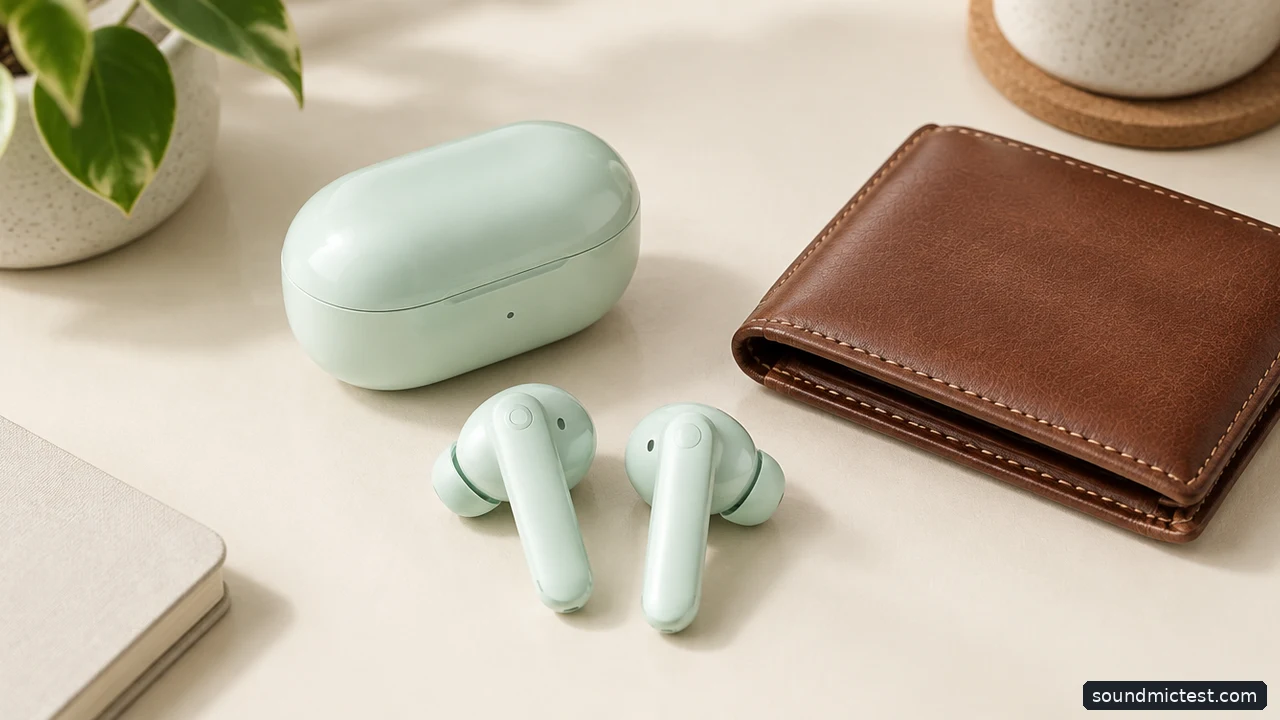
A lower price is useful when the fit and essential features are right. Editorial illustration.
CMF Buds 2: leave room in the budget
At the checked price, CMF Buds 2 leaves roughly half the allowance unspent. Nothing lists active noise cancellation and an 11 mm driver. The useful buying argument is the combination of price and features, not the assumption that driver size determines sound quality.
The advertised cancellation figure is also not a universal measurement of how quiet a bus, office or street will become. A single peak number does not describe attenuation across frequencies, and different manufacturers may use different test conditions. Treat it as a feature claim, then judge fit and noise-control behavior during the return period.
Consider this model if you want a practical everyday pair and have no specific reason to spend more. Pass if a required feature is missing or the shape does not stay comfortable in your ears. A saving disappears quickly if the earbuds end up unused in a drawer.
Nothing Ear (a): pay for a feature you can actually use
The Ear (a) listing showed $79 when checked and includes LDAC support. That is relevant if your source device supports LDAC and you intend to use it. It is much less meaningful if your phone will connect through another codec.
Do not assume that an upgraded codec fixes a poor ear-tip seal or makes an unsuitable tuning enjoyable. Fit and the way the earbuds interact with your devices remain more important purchasing checks. Compare the actual price with newer options rather than buying solely because an older review once called it a bargain.
This is the sort of upgrade to make for a known need. If you cannot identify what Ear (a) adds to your daily routine over the cheaper option, keeping the difference is a reasonable choice.
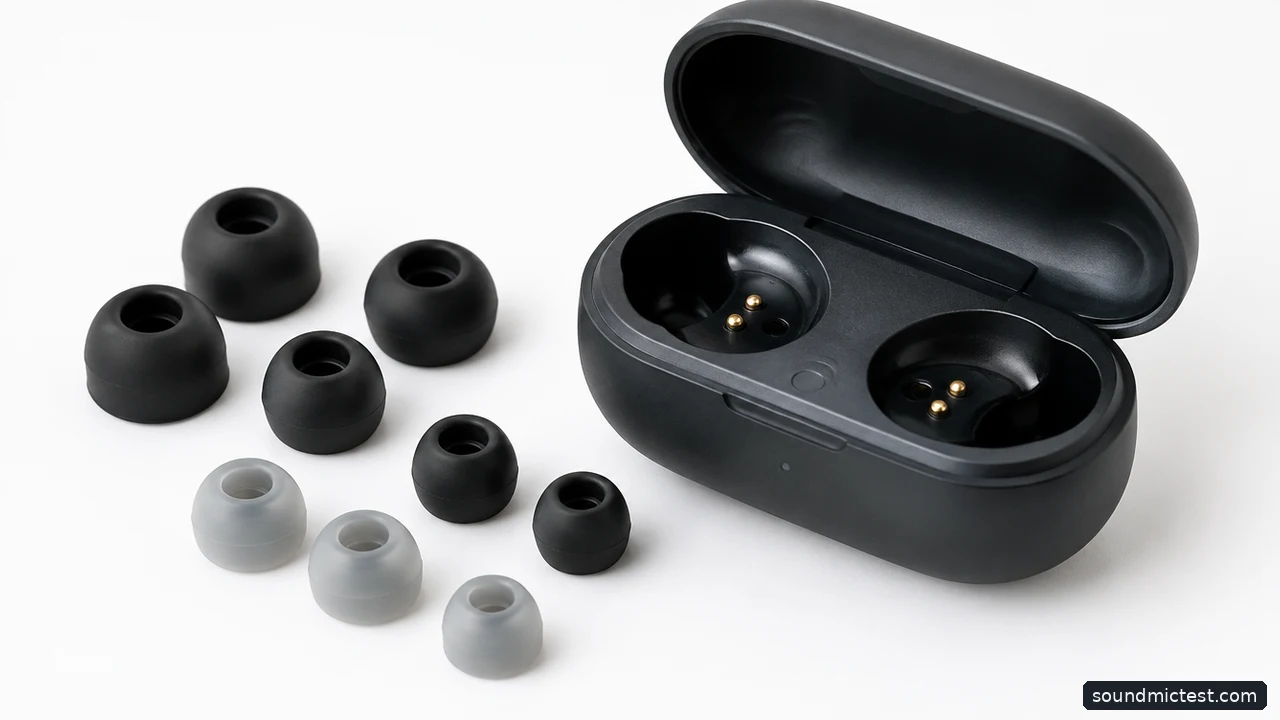
Check the fit and keep charging contacts clean. Editorial illustration.
Nothing Ear (3a): compare the top of the allowance carefully
Nothing's US audio range lists Ear (3a) at $99, putting it close to the ceiling before tax. Its product information describes LDAC and active noise cancellation, but those feature labels alone do not establish an audible improvement over Ear (a).
At this price, assess the whole package: fit, controls, warranty and software support. A newer generation is a reason to compare the details, not an automatic instruction to buy. Also decide whether your $100 limit includes tax; if it does, a $99 sticker price may already be too high.
Keep the comparison specific. If the newer model improves a function you use every day, the premium may be sensible. If both meet your requirements, the cheaper one can remain the better purchase even with a newer model on the shelf.
JLab Go Pop ANC: a lower-cost benchmark for your shopping list
The Transparent Purple Go Pop ANC listing showed a $19.99 sale price. That makes it useful as a reality check: how much extra value do the more expensive options provide for your particular routine?
Check the exact color and model before comparing prices. Sales can apply to one variant, and similarly named JLab products have different features. Do not turn a temporary offer into a permanent budget recommendation without rechecking it.
A very inexpensive pair can make sense as a backup or for occasional listening. For daily calls or long commutes, spend more only if it buys a clear improvement that you can verify, such as a more suitable fit or a needed connection feature.
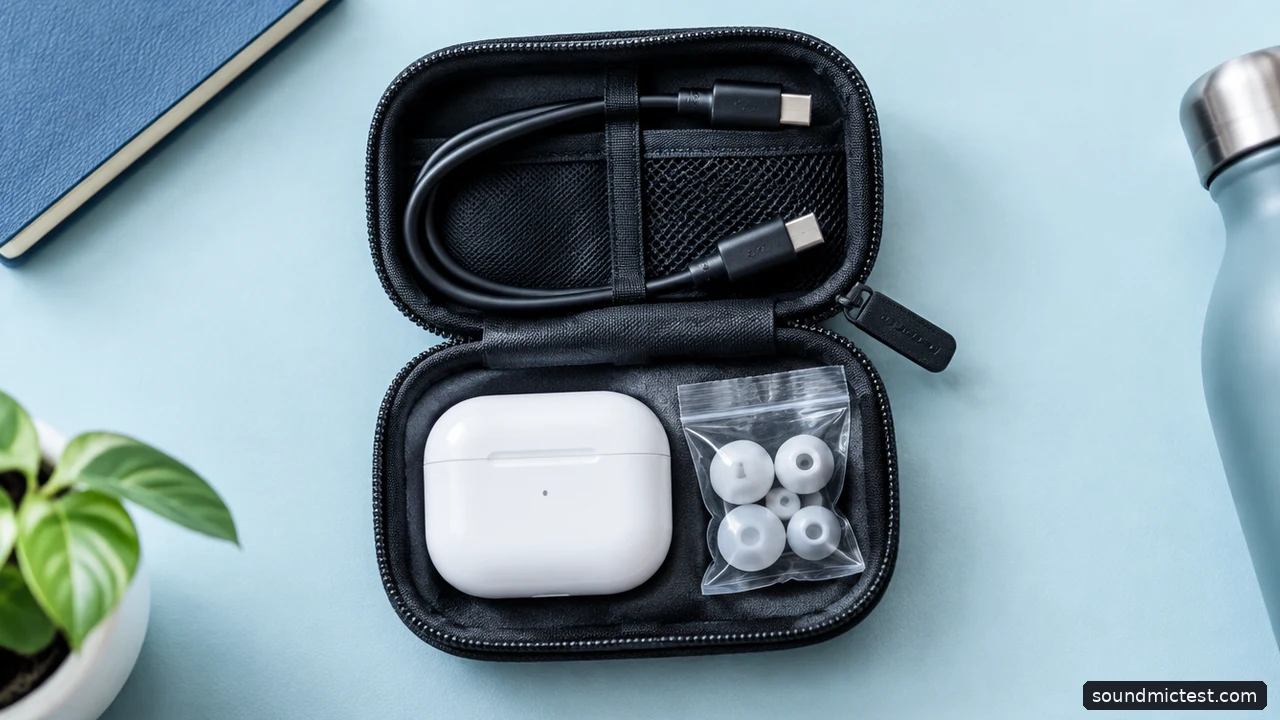
Budget for the small accessories you will actually need. Editorial illustration.
The checks that matter more than another specification
Try the supplied tip sizes at a modest volume. Walk around indoors, speak and move your jaw. If the earbuds loosen or the bass changes dramatically when you reseat them, address fit before exploring the equalizer.
Next, test both earbuds independently if that is part of your routine. Check whether removing one pauses playback, how you change volume and what happens when a call arrives. These small interactions determine whether a cheap pair feels convenient or irritating.
Use our stereo channel check to confirm left and right playback. For calls, make a short recording with the microphone test on your actual laptop or phone. The result is a setup check, not a lab comparison, but it can reveal a wrong input or an uncomfortable control routine.
The sensible purchase is the least expensive option that meets your real requirements. Spend closer to $100 for a specific advantage, not because the budget exists. Keep the packaging until you have tested comfort, charging and calls through a normal day.