Headphones and earbuds
Best Noise-Canceling Earbuds for Sleeping: Fit and Overnight Practicality
If you search for noise-canceling earbuds for sleeping, separate three different tools: a physical seal, active noise cancellation and sound masking. They address noise in different ways.

Noah Mitchell is an editorial pen name for wireless audio and accessories at Sound Mic Test. Articles explore earbuds, portable audio, cables and the small setup choices that affect everyday listening.
Sound Mic Test editorial pen name.
noah.mitchell@soundmictest.com
If you search for noise-canceling earbuds for sleeping, separate three different tools: a physical seal, active noise cancellation and sound masking. They address noise in different ways. A product that plays a soothing sound through a sealed tip is not automatically an ANC earbud, even when the listing promises quieter nights.
Soundcore's Sleep A30 family is worth investigating when ANC is a specific requirement. Sleep A20 is a contrasting option built around passive blocking and masking, not active cancellation. Newer models should be checked against their exact specifications rather than assumed equivalent. This guide compares documented functions and overnight practicalities; it does not claim to treat insomnia or establish medical sleep benefits.
Match the technology to the disturbance
| Approach | What it does | What it does not establish |
|---|---|---|
| Passive isolation | Uses the fit to reduce incoming sound | A universal reduction for every ear |
| ANC | Applies active processing to reduce certain noise | Complete silence or guaranteed snore removal |
| Sound masking | Plays audio that makes other sounds less prominent | Removal of the external sound itself |
| Room changes | Addresses the source or listening environment | A solution to every sleep problem |
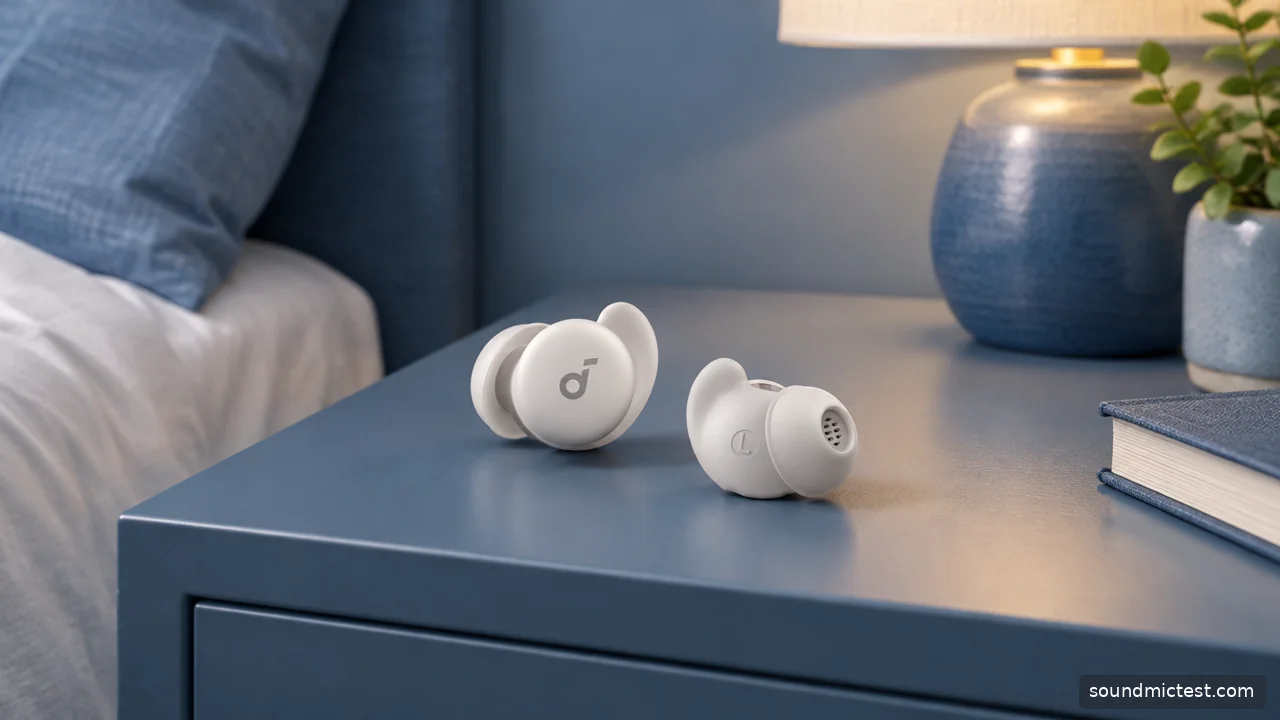
Sleep A20 uses passive isolation and sound masking; it is not an ANC earbud. Editorial illustration.
Sleep A30 for an ANC-focused shortlist
Soundcore's current sleep-earbud guide distinguishes Sleep A30, A30 Special and newer sleep models from the passive A20. That distinction matters more than a broad noise-reduction headline.
If ANC is your reason to buy, confirm that it operates in the playback mode you intend to use and check the corresponding single-charge runtime. A default-mode claim, Bluetooth claim and ANC claim may describe different settings. The case's combined total is not an overnight runtime figure.
Also verify how adaptive masking works and which components it uses. Do not assume that an external sound has been canceled just because another sound makes it less noticeable. The practical benefit may still matter, but the mechanism should be described accurately.
A20 when masking and fit matter more than ANC
The Sleep A20 product page describes a sleep-focused design with passive blocking, masking and separate Sleep and Bluetooth modes. It is a useful alternative when you do not specifically need active cancellation.
Its role in this comparison is deliberate: shoppers often encounter the model in searches for noise cancellation, but it should not be purchased on that assumption. Compare the tip arrangement, local playback behavior and alarm options instead.
For readers whose main question is overnight comfort and routine rather than ANC, a broader sleep-earbud comparison should focus on those practical differences. A comfortable passive option can be more useful than an active model that presses against the pillow, but that is a fit decision rather than a laboratory performance conclusion.
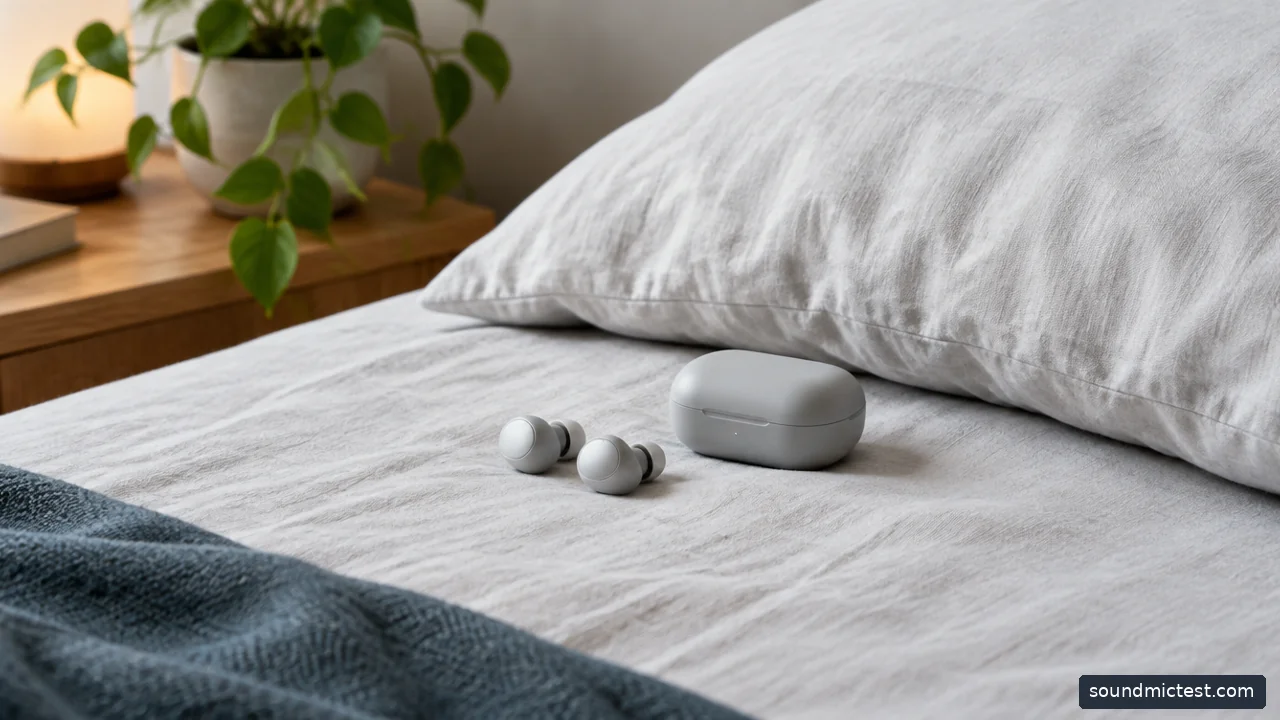
Small generic sleep earbuds beside a soft pillow, no person. Editorial illustration.
Side sleeping changes the fit test
An earbud that feels small while you sit upright can press against the ear when your head rests on a pillow. Check the profile, tip size and wing arrangement while awake in your normal sleeping position. Do not assume that a low weight guarantees comfortable pressure distribution.
Try both sides and notice whether controls trigger against the pillow. Remove the earbuds if they become uncomfortable. A tighter fit is not automatically a better solution, and forcing an unsuitable shell into place can turn a noise problem into a comfort problem.
Consider the return policy before ordering because this fit is difficult to predict from specifications. Keep packaging and avoid modifications while evaluating the product. The useful test is whether it sits comfortably in your routine, not whether it matches a photograph of someone sleeping peacefully.
Battery, alarms and interruptions need advance checks
Set up the desired audio and alarm behavior before bedtime. Confirm whether the earbud alarm requires the phone, whether streaming continues after a mode change and what happens when the battery runs low. These details can matter more than another advertised soundscape.
Do not rely on noise-isolating earbuds if you need to hear a child, an emergency signal or another important sound without first considering an appropriate arrangement. Test alarms while awake and keep playback at a low, comfortable level. Earbuds are not a substitute for a suitable safety setup.
If overnight streaming is unnecessary, local playback may simplify the routine, but verify the exact model's behavior. Do not assume that downloading one sound transfers your entire music service to the earbuds.
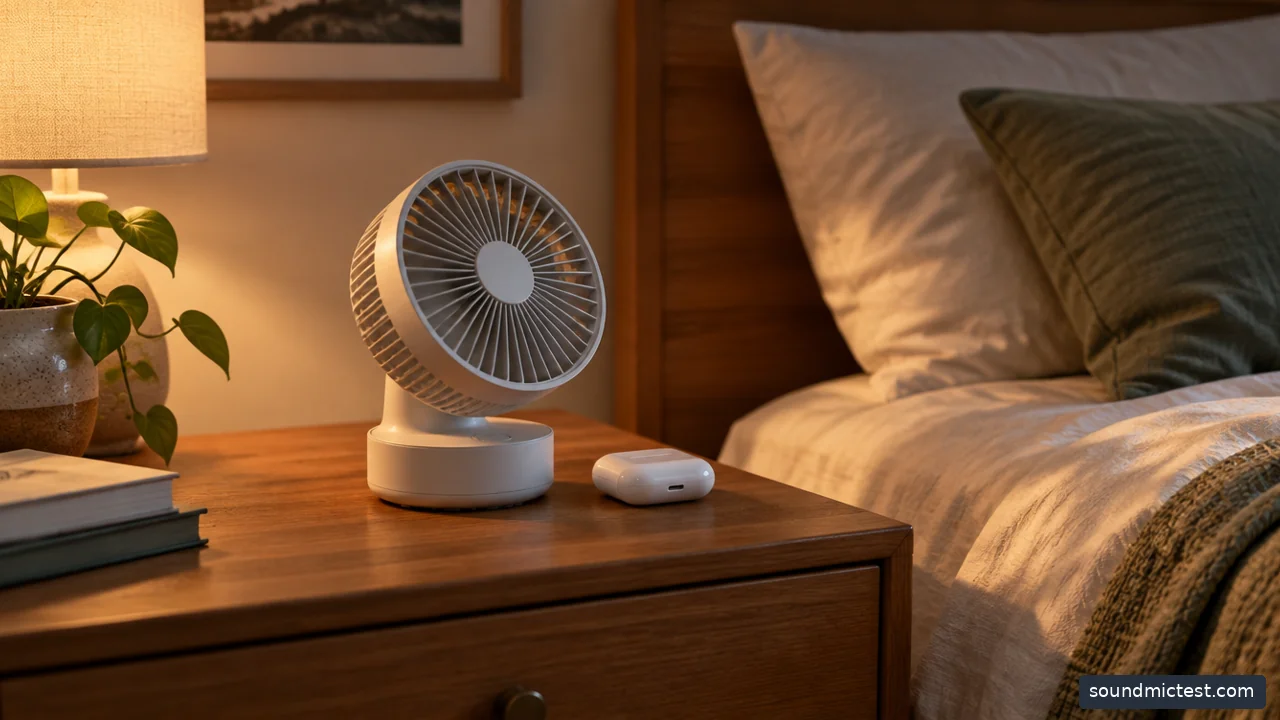
Small bedside fan and earbud case on a nightstand, warm evening light. Editorial illustration.
Keep the purchase focused on a realistic job
Identify the disturbance first. A steady appliance hum, changing snoring and sudden hallway noise are different challenges. Manufacturer demonstrations are not guarantees that your bedroom will become silent. Addressing an avoidable noise source may be more effective than adding another device.
Clean and dry the earbuds according to their instructions, and store them consistently so a missing bud does not become a nightly search. Treat app sleep summaries as consumer information rather than a diagnosis. Persistent sleep or ear concerns deserve appropriate professional advice rather than increasingly elaborate audio settings.
The stereo test can confirm basic playback while awake, but it cannot assess sleep quality or quantify noise reduction. Choose an ANC model only when that feature and its documented overnight mode match your need. Choose A20 or another passive alternative when fit and masking are the actual priorities, with clear expectations about what the technology can and cannot do.